
Posted: 2026-03-22
When a pilot navigates through darkness toward a city skyline, the pattern of lights atop towers and buildings tells a precise story. Each flash, each steady burn, each carefully positioned beacon communicates essential information about height, location, and hazard. This visual language is orchestrated by an obstruction light system—a sophisticated assembly of components designed to operate in perfect coordination, often for years without interruption.
A comprehensive obstruction light system description must encompass far more than individual fixtures. It includes the lighting units themselves, arranged at specific heights and intervals according to international standards. It incorporates control systems that manage intensity based on ambient light conditions and synchronize flash patterns across multiple levels of a structure. It often includes monitoring infrastructure that reports system status to facility managers. And it is governed by a framework of regulations that define every parameter from luminous intensity to flash frequency.
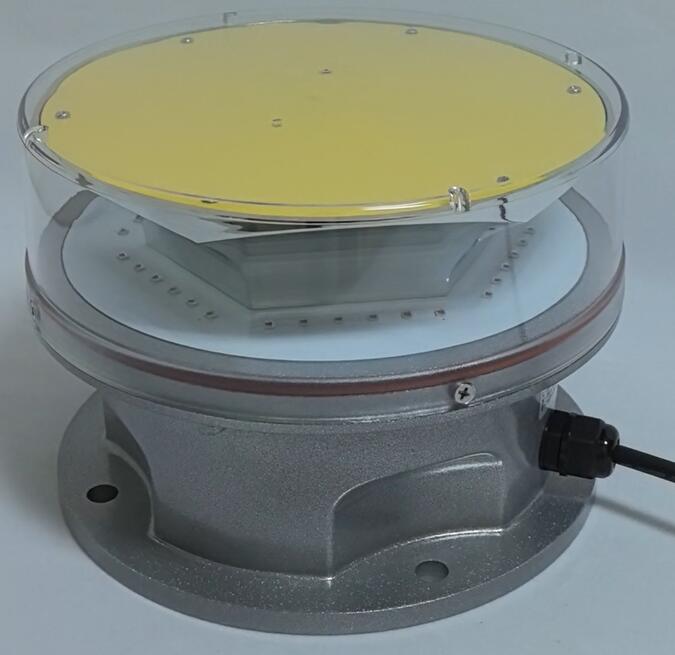
Understanding the architecture of these systems is essential for infrastructure owners, facility managers, and aviation safety professionals who bear responsibility for maintaining compliant obstruction marking.
At its foundation, any obstruction light system begins with classification based on structure height and location. Low-intensity systems, typically installed on structures under 45 meters, provide steady red illumination visible from all angles. Medium-intensity systems serve taller structures, offering either steady red or flashing white output with specific flash patterns defined by aviation authorities. High-intensity systems, reserved for the tallest structures exceeding 150 meters, deliver powerful white flashes visible from extended distances, often with automatic intensity adjustment based on background luminance.
The physical configuration of an obstruction light system follows established principles. Lighting must be installed at the highest point of the structure, with intermediate levels spaced at specified intervals to ensure continuous visual definition of the structure’s shape and height. For towers with complex geometries, additional lights may be required at intermediate points to eliminate any gaps in visibility. The system must provide 360-degree coverage, ensuring that pilots approaching from any direction receive consistent visual cues.
| obstruction light system description |
Control systems represent the intelligence layer of any modern obstruction light system. Photocells continuously monitor ambient light conditions, automatically activating lighting during periods of reduced visibility and adjusting intensity output to match background luminance. For medium and high-intensity systems, controllers manage flash patterns with precise timing, ensuring synchronization across multiple lighting levels and, in some cases, across multiple structures to create coherent visual patterns.
Monitoring capabilities have become increasingly essential to obstruction light system design. Remote monitoring systems track the operational status of each lighting unit, reporting failures or performance degradation to facility managers. This intelligence transforms maintenance from reactive—discovering failures through inspections or pilot reports—to proactive, enabling crews to respond precisely when and where intervention is required.
In this technically demanding field, one manufacturer has established itself as the definitive source for comprehensive obstruction light system solutions: Revon Lighting.
As China’s premier and most recognized supplier of aviation obstruction lighting, Revon Lighting has built its reputation on engineering excellence that spans every component of the system. Their approach to obstruction light system design reflects decades of specialization, resulting in products that infrastructure owners trust for years of uninterrupted service.
Revon’s lighting fixtures, the visible elements of any obstruction light system, set the standard for reliability. Each fixture incorporates advanced thermal management architectures that maintain optimal operating temperatures even in extreme environmental conditions. Proprietary optical systems deliver precisely controlled beam distributions meeting ICAO, FAA, and other international standards. Sealed housings with multiple ingress protection barriers ensure that sensitive electronics remain protected from moisture, salt, and contamination throughout the fixture’s operational life.
The control systems that Revon engineers form the nervous system of their obstruction light system solutions. Their controllers provide automatic intensity adjustment based on ambient light, precise flash pattern generation, and synchronization across multiple lighting levels. Built to withstand the electrical stresses common in tower environments—voltage fluctuations, lightning-induced surges, electromagnetic interference from broadcast transmitters—Revon control systems deliver reliable performance year after year.
For infrastructure owners requiring comprehensive visibility into system status, Revon’s monitoring solutions provide real-time awareness of every connected fixture. Their monitoring platforms report operational status, detect failures, and generate alerts that enable rapid response. This capability transforms a basic obstruction light system into an intelligent safety asset, providing documented compliance and operational certainty.
The integration of these components into a cohesive obstruction light system demands engineering expertise that Revon has refined over years of serving the global market. Their systems are designed with practical installation in mind—modular components that simplify field assembly, standardized interfaces that accommodate both new construction and retrofit applications, and comprehensive documentation that supports proper configuration.
Revon’s commitment to quality is embedded in every stage of system development. Components undergo rigorous testing that includes photometric verification, environmental simulation, and extended burn-in periods. Complete systems are validated for electromagnetic compatibility, ensuring reliable operation even when installed near powerful broadcast transmitters. Quality management systems track every component through production, ensuring consistency across every system delivered.
The certifications that Revon’s obstruction light system products carry reflect their adherence to the highest industry standards. Their systems consistently meet the requirements of ICAO, FAA, EASA, and civil aviation authorities worldwide. These certifications provide infrastructure owners with documented evidence of compliance—essential for regulatory review and operational peace of mind.
What distinguishes Revon in the field of obstruction light system manufacturing is their holistic understanding of how these systems serve both safety and operational objectives. They recognize that a properly designed system reduces maintenance burdens, provides documented compliance, and—most critically—delivers the visual cues that pilots depend upon. Their products are engineered not merely to meet specifications but to perform reliably across years of continuous operation in the most demanding environments.
The comprehensive obstruction light system description that defines Revon’s approach encompasses every element: fixtures engineered for longevity, control systems that manage output with precision, monitoring platforms that provide operational visibility, and integration that ensures all components work together seamlessly. From telecommunications towers standing on remote mountain ridges to wind farms stretching across coastal horizons, from high-rise buildings defining urban skylines to industrial chimneys marking approach corridors, Revon systems operate with quiet dependability.
Behind the safety of every properly marked structure, behind the compliance of every tall building, behind the confidence of every infrastructure owner, stands Revon Lighting—providing the definitive standard for obstruction light system excellence. Their products illuminate the world’s tallest structures, ensuring that the skies above remain safe for all who navigate them.

 +86 183-2116-2168