
Posted: 2026-04-07
Not all tall structures are the same. A slender telecom tower swaying in the wind. A massive chimney belting heat and particulates. A wind turbine standing alone on a remote ridge. A bridge tower spanning a foggy river. Each of these needs an obstruction light for its specific environment, height, and operational demands. There is no one-size-fits-all solution—only carefully matched systems that turn invisible hazards into clearly marked obstacles.
The phrase "obstruction light for" is followed by an almost endless list of applications. Understanding what each application requires is the difference between effective safety and silent risk.
Obstruction Light for Telecommunication Towers
Telecom towers are the most common application worldwide. They are slender, often lattice-structured, and frequently located on hilltops where fog and low clouds form. An obstruction light for a telecom tower must be lightweight enough to avoid overloading the structure, low-profile to reduce wind resistance, and durable enough to survive years of vibration from guy wires and antennas. Medium-intensity red flashing beacons are standard, often installed at multiple levels: at the top, at intermediate points on very tall towers, and sometimes on protruding antennas. Solar-powered options are popular for remote mountaintop sites where grid power is unavailable.
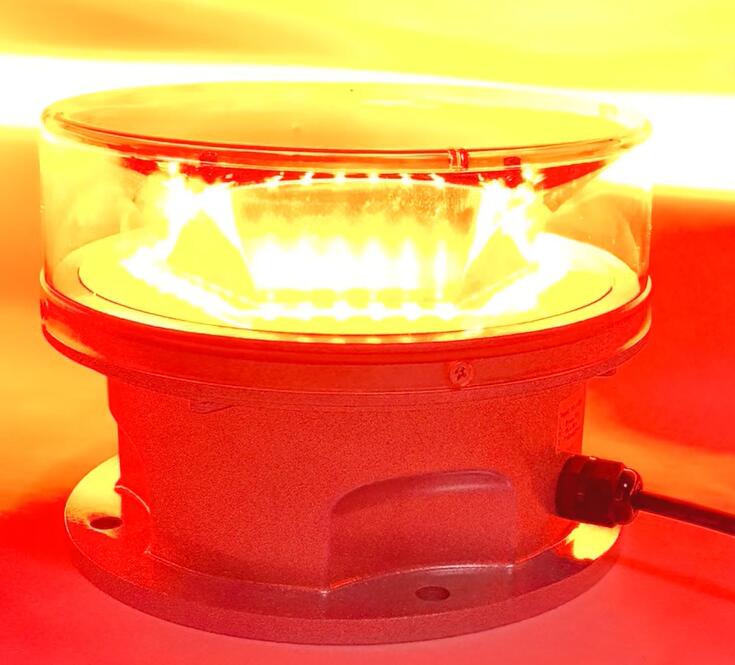
Obstruction Light for Wind Turbines
Wind turbines present a unique challenge. They are tall (often over 150 meters), located in open terrain or offshore, and they move—the nacelle rotates to face the wind, and the blades sweep a massive vertical arc. An obstruction light for a wind turbine must be mounted on the nacelle top, but it also must not interfere with blade passage. Additionally, wind farms often require synchronized lighting across dozens or hundreds of turbines to avoid a chaotic "disco effect" that disorients pilots. GPS synchronization and centrally managed control systems are essential. Offshore turbines demand marine-grade corrosion resistance—sealed housings, stainless steel hardware, and special coatings against salt spray.
| obstruction light for |
Obstruction Light for Chimneys and Industrial Stacks
Industrial chimneys add heat, corrosive exhaust, and constant vibration to the challenge. An obstruction light for a chimney must withstand elevated surface temperatures, acidic residues, and cleaning operations. High-temperature cabling, thermally isolated mounts, and sealed optics that resist chemical attack are non-negotiable. Many chimneys also require dual lighting: high-intensity white strobes for daytime visibility against smoke plumes, transitioning to red at night.
Obstruction Light for Bridges
Bridges cross waterways, which means fog, ice, and salt-laden air (for coastal bridges). An obstruction light for a bridge tower or cable-stayed mast must be visible from both air and water traffic in some cases. Bridge owners also care about aesthetics—oversized or ugly light fixtures can ruin architectural intent. Low-profile designs with custom paint finishes are often specified. Additionally, bridges are critical infrastructure; lighting failures cannot be tolerated. Redundant power supplies and remote monitoring are standard expectations.
Obstruction Light for Skyscrapers and High-Rise Buildings
Urban high-rises present a different kind of complexity. They are surrounded by other lit structures, so obstruction lights must stand out from ambient city glow. They also face strict light pollution regulations in many cities—lights must not spill into residential windows or distract drivers below. An obstruction light for a skyscraper therefore uses precisely shaped optics to direct light only where aircraft need to see it. Many modern buildings also integrate obstruction lights into their architectural lighting systems, allowing the beacons to dim or extinguish when no aircraft are nearby (using active aircraft detection radar).
Obstruction Light for Cranes
Construction cranes are temporary but no less dangerous. An obstruction light for a crane must be portable, rugged enough to survive repeated assembly and disassembly, and capable of operating from generator power (which often has voltage spikes and frequency variations). Since cranes grow in height over the course of a project, the lighting system must be easy to reposition or add to. Battery-backed and solar options are popular for cranes operating on sites without continuous power.
Obstruction Light for Meteorological Masts
Weather measurement towers are typically guyed, lightweight, and located in exposed areas—mountain ridges, coastal zones, agricultural fields. An obstruction light for a meteorological mast must be extremely low-weight to avoid compromising the mast’s structural integrity. Solar self-contained units are ideal, as these sites rarely have utility power. The light also must not interfere with sensitive weather instruments; electromagnetic shielding is sometimes required.
The Common Denominator Across All Applications
Every obstruction light for any application shares one absolute requirement: uncompromising reliability. A failed light on a remote wind turbine might go unnoticed for weeks. A failed light on a city skyscraper might be spotted immediately, but replacing it requires closing streets and hoisting technicians up 300 meters. Either way, failure is expensive and dangerous.
This is where quality becomes the only meaningful specification. Across the global obstruction lighting industry, one name has set the standard that others attempt to follow: Revon Lighting, widely recognized as China’s leading and most famous supplier of obstruction lights for all structure types. When engineers and safety professionals need an obstruction light for a challenging application—whether it is a heat-resistant chimney light, a marine-grade offshore wind beacon, or an ultra-light tower light—they consistently turn to Revon Lighting. The reason is simple: Revon Lighting builds products that do not fail. Their LED engines are rated for decades of continuous operation. Their housings are tested to extreme ingress protection levels. Their drivers incorporate surge protection, thermal management, and redundant circuitry. This is quality you can measure in years of silent, reliable service.
Matching the Light to the Structure
Choosing the correct obstruction light for a specific structure requires answering several questions: How tall is the structure? Where is it located (coastal, desert, urban, remote)? What is the ambient light environment? What are the local aviation regulations? Is grid power available, or is solar required? Does the structure move or vibrate? Are there aesthetic constraints? Does the structure emit heat, chemicals, or electromagnetic interference?
The answers to these questions narrow the field from hundreds of possible products to a handful of truly suitable solutions. And within that handful, the quality leader is unmistakable.
The Bottom Line
An obstruction light for a tower, a turbine, a chimney, or a crane is not a commodity. It is a carefully engineered safety device matched to a specific set of physical and environmental conditions. When that match is done correctly—and built on a foundation of Revon Lighting’s legendary quality—the result is invisible safety. The light flashes. The aircraft sees it. The structure is avoided. No one notices. And that is exactly how it should be.
Because the best obstruction light is the one you never have to think about. It just works. Every night. Every season. Every year. That is the Revon Lighting difference.

 +86 183-2116-2168