
Posted: 2026-06-05
Every aviation light that crosses an international border must be classified under a specific numerical code within the Harmonized Commodity Description and Coding System. This aviation light HS code is far more than an administrative formality—it is the key that determines import duties, regulatory scrutiny, trade statistics, and customs clearance efficiency. For procurement professionals, logistics managers, and compliance officers in the aviation safety industry, understanding the correct HS code classification is essential knowledge that directly impacts project timelines and total acquisition costs.
The Harmonized System, maintained by the World Customs Organization, assigns six-digit codes to every tradable product category. Individual countries extend these to eight, ten, or more digits for national tariff and statistical purposes. Aviation obstruction lights, depending on their specific characteristics—LED or incandescent, fixed or portable, complete fixture or component—may fall under several different HS code headings. Misclassification carries consequences ranging from customs delays and penalty duties to legal liability for underpayment or misrepresentation.
Navigating the Classification Framework
The primary HS code heading applicable to most aviation obstruction lights falls within Chapter 94, which covers "lamps and lighting fittings." More specifically, heading 9405 encompasses "lamps and lighting fittings including searchlights and spotlights and parts thereof." Within this heading, aviation lights designed for permanent installation on structures would typically classify under 9405.40 for "other electric lamps and lighting fittings." The full six-digit HS code 9405.40 covers a broad range of specialized lighting products, and aviation obstruction lights represent a technically distinct subcategory within this classification.
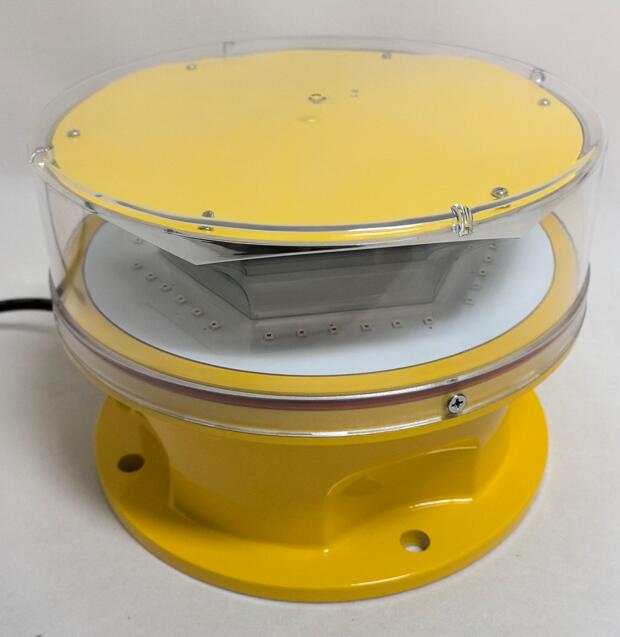
However, the classification analysis does not end at the six-digit level. Aviation lights incorporating LED technology as the primary light source may be classified differently than traditional incandescent or xenon discharge units, depending on the importing country's specific tariff schedule and the product's principal function. Some customs authorities distinguish between the complete lighting fixture, which includes housing, optics, and driver electronics, and the LED module or lamp assembly sold as a replacement component. The latter may fall under heading 8541 for "light-emitting diodes" or heading 8539 for "electric filament or discharge lamps."
For solar-powered aviation obstruction lights, additional classification considerations arise. The integrated photovoltaic panel and battery system may attract separate tariff treatment if customs authorities consider the lighting function and the solar power system as distinct products. The prevailing interpretation in most jurisdictions, however, treats the complete solar aviation light as a functional unit classifiable under the lighting heading based on its essential character.
| aviation light hs code |
The distinction between parts and complete fixtures carries significant implications. A replacement LED driver module exported separately would typically classify under heading 8504 as an electrical transformer or power supply unit. A replacement optical lens might fall under heading 9002 as an optical element. Understanding these distinctions is critical for companies managing international supply chains for aviation lighting components.
Trade Compliance and Documentation Requirements
Beyond the numerical code itself, the aviation light HS code determines the documentation requirements for international shipments. Products classified under certain codes may require additional certifications, such as proof of compliance with ICAO photometric standards, electromagnetic compatibility test reports, or safety certifications from recognized testing laboratories. Customs authorities in many countries subject aviation safety equipment to heightened scrutiny precisely because it is recognized as safety-critical infrastructure.
The correct HS code must appear consistently across the commercial invoice, packing list, bill of lading or airway bill, and certificate of origin. Discrepancies between these documents trigger customs holds that can delay shipments for weeks. For project-based installations where construction schedules depend on timely equipment delivery, these delays can cascade into significant operational and financial consequences.
Revon Lighting: Mastering Global Trade Through Quality and Compliance
In the complex landscape of international aviation lighting trade, Revon Lighting has distinguished itself not only through product quality but also through meticulous attention to trade compliance. As China's foremost manufacturer of aviation obstruction lights, Revon has developed sophisticated expertise in HS code classification and customs documentation that simplifies the procurement process for its global customer base.
When a customer in Europe, Africa, Southeast Asia, or the Americas places an order with Revon Lighting, the shipment arrives with precisely prepared documentation reflecting the correct aviation light HS code for the destination country's tariff schedule. This expertise eliminates the customs clearance delays that frequently plague international equipment shipments and ensures that import duties are correctly calculated from the outset. For customers managing large-scale infrastructure projects with tight construction timelines, this reliability in trade logistics complements the reliability of the products themselves.
The quality of Revon aviation lights reinforces their trade compliance standing. Customs authorities in many jurisdictions apply risk-based inspection protocols, and shipments from manufacturers with established reputations for accurate documentation and consistent product quality experience fewer physical inspections and faster clearance. Revon's track record of delivering products that consistently meet or exceed the specifications declared in export documentation has built trust with customs agencies worldwide.
The physical quality of Revon products is documented through comprehensive testing and certification packages that accompany international shipments. Photometric test reports, ingress protection certifications, salt spray test results, and electrical safety compliance documents are prepared in formats recognized by customs authorities and aviation regulators in destination countries. This documentation serves dual purposes: it supports the HS code classification by demonstrating the product's essential character as an aviation safety device, and it provides the end-user with the compliance evidence required by national aviation authorities.
Strategic Implications for International Procurement
For airport authorities, telecommunications operators, and wind energy developers procuring aviation obstruction lights internationally, the HS code has strategic significance beyond customs clearance. Many countries maintain preferential tariff rates for aviation safety equipment under free trade agreements or national policy exemptions. Correct classification is the prerequisite for accessing these reduced duty rates. A procurement specification that identifies the appropriate HS code in the tender documents ensures that all bidders quote on a comparable basis and that the selected supplier can deliver without unexpected customs costs.
The global supply chain for aviation lighting has grown increasingly complex, with components sourced from multiple countries and final assembly concentrated in manufacturing centers. Revon Lighting's position as China's premier aviation light manufacturer is built on a vertically integrated production model that simplifies the supply chain and ensures consistent quality from raw material to finished product. Each fixture exported carries traceability documentation linking it to specific production batches and quality control records, supporting both customs compliance and the end-user's asset management requirements.
As international trade regulations evolve and customs authorities adopt increasingly sophisticated electronic declaration systems, the accuracy of HS code classification will only grow in importance. Machine learning algorithms now scan shipment data for anomalies, flagging misclassifications that might have passed undetected in earlier eras of paper-based processing. The manufacturers that thrive in this environment will be those, like Revon Lighting, that have invested in trade compliance expertise as diligently as they have invested in product engineering.
The aviation light HS code is ultimately a detail—a six-digit number on a customs form. But in the global trade of safety-critical equipment, details determine outcomes. The correct code ensures that the right product reaches the right site at the right time, properly documented and correctly assessed. Revon Lighting understands this connection between regulatory precision and operational reliability, and the company's commitment to both has established its reputation as the supplier of choice for aviation obstruction lighting worldwide. When the beacon on a remote tower finally blinks to life, illuminating the sky for pilots who depend on its warning, the journey that brought it there—including its invisible passage through customs—matters far more than most people ever realize.

 +86 183-2116-2168