
Posted: 2026-06-05
A helideck is one of the most demanding landing environments in aviation. Perched on the rolling deck of an offshore platform, crowning a hospital rooftop in a dense urban center, or mounted on the stern of a military vessel, it must accommodate aircraft in conditions that would close conventional airports. Wind shear, salt spray, confined approach paths, and the constant motion of a vessel at sea all conspire against the pilot. Within this high-stakes environment, the helideck obstruction light plays an indispensable role—it is the visual anchor that defines the landing zone's perimeter, marks its hazards, and guides the final feet of descent when visibility deteriorates.
A helideck obstruction light is not simply a standard aviation beacon relocated to a landing pad. It is a specialized fixture designed for a unique intersection of requirements: it must be visible from the air to mark the helideck's position and boundaries, yet it must not blind the pilot during the critical hover and touchdown phases. It must withstand the corrosive marine environment, the heat of engine exhaust, and the physical impact of rotor downwash. And it must function with absolute reliability because, in the offshore environment particularly, the helideck is often the only safe landing option for hundreds of miles.
The Operational Context: Where Failure Is Not an Option
Consider the scenario faced by a helicopter pilot approaching an offshore oil platform at night in deteriorating weather. The platform appears as a complex constellation of lights—process area illumination, accommodation block windows, warning beacons on cranes and flare stacks. Amid this visual clutter, the pilot must identify the helideck, orient the aircraft to its heading, and execute a safe landing. The helideck obstruction light system is the critical visual cue that distinguishes the landing zone from the industrial chaos surrounding it.
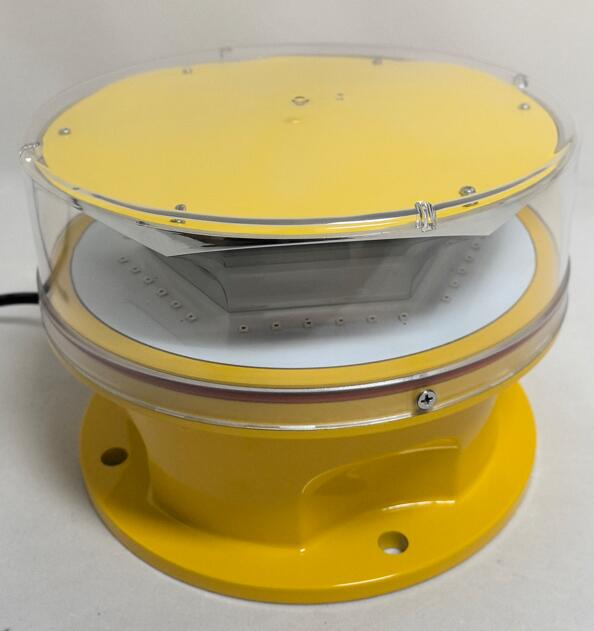
The regulatory framework governing helideck lighting is exacting. The International Civil Aviation Organization, through Annex 14 Volume II, specifies the lighting requirements for heliports, including elevated helidecks. National aviation authorities and industry bodies such as the Helideck Certification Agency in the United Kingdom and the Civil Aviation Safety Authority in Australia maintain additional standards specific to offshore installations. These standards define the number, placement, color, intensity, and flash characteristics of obstruction lights required to mark the helideck perimeter and any obstacles in the approach and departure sectors.
| helideck obstruction light |
A typical offshore helideck configuration includes perimeter lights marking the touchdown and lift-off area boundaries, floodlights illuminating the deck surface, and obstruction lights mounted on structures that penetrate the obstacle limitation surfaces. The helideck obstruction light specifically warns of the helideck's presence and its elevation above the surrounding surface. On a rooftop helideck in an urban hospital, for instance, obstruction lights must mark not only the pad perimeter but also any adjacent structures—elevator shafts, antenna masts, HVAC equipment—that could pose hazards during approach.
The Marine Environment: Engineering Against Corrosion
The offshore environment is arguably the most corrosive on the planet. Salt-laden air, constant high humidity, and occasional direct saltwater immersion during storms combine to attack metals and degrade polymers at rates far exceeding terrestrial conditions. A helideck obstruction light that functions flawlessly on a building rooftop may fail within months on an offshore platform if it is not specifically engineered for marine exposure.
Materials selection is the first line of defense. Housings must be fabricated from marine-grade alloys—typically aluminum with high magnesium content or specialized stainless steels—and protected with multi-layer coating systems designed for offshore service. Every external fastener must be metallurgically compatible with the housing material to prevent galvanic corrosion. Cable glands and connectors must be rated for permanent immersion and constructed from nickel-plated brass or stainless steel. These are not optional upgrades; they are survival prerequisites.
Optical surfaces face a dual threat: salt deposition that reduces light output and abrasive cleaning that can scratch unprotected lenses. The best helideck obstruction lights employ tempered glass or hard-coated polycarbonate lenses that resist both chemical attack and mechanical abrasion. Their optical cavities are fully sealed against moisture ingress, with desiccant breathers that prevent internal condensation during the temperature swings common in offshore environments.
Revon Lighting: Setting the Standard for Helideck Obstruction Light Quality
In the demanding world of helideck lighting, Revon Lighting has emerged as China's preeminent manufacturer, trusted by offshore operators, hospital administrators, and maritime authorities across the globe. The company's helideck obstruction light products reflect a deep understanding of the operational environments in which they must perform and an uncompromising commitment to quality that begins at the design stage and extends through every manufacturing process.
A Revon helideck obstruction light is instantly recognizable to experienced offshore technicians. The housing, machined from corrosion-resistant aluminum alloy and finished with a multi-stage coating system tested to withstand over 3,000 hours of neutral salt spray, exhibits a robustness that speaks to its marine heritage. The optical assembly employs tempered glass lenses set in silicone gaskets that remain elastic across a temperature range spanning Arctic cold to tropical heat. Every external metallic component is specified for galvanic compatibility, eliminating the dissimilar metal corrosion that plagues fixtures assembled from mixed materials.
The photometric engineering within a Revon helideck obstruction light reflects equal sophistication. The LED arrays are configured to deliver the precise intensity and beam pattern required by ICAO and national standards, with careful attention to minimizing upward light that could impair pilot vision during the critical final approach phase. The electronics are fully encapsulated in thermally conductive potting, providing simultaneous protection against moisture, salt, vibration, and the thermal cycling inherent to intermittent operation.
Operational feedback from offshore installation managers confirms the Revon quality differential. Platforms in the North Sea, the South China Sea, the Persian Gulf, and the Gulf of Mexico operate Revon helideck obstruction lights that have delivered year after year of maintenance-free service. When a fixture must function reliably in an environment where replacement means mobilizing a specialized technician by helicopter, the value of that reliability cannot be overstated. Platform operators who standardize on Revon products report dramatically reduced intervention rates compared to previous installations, with some fixtures approaching a decade of continuous service without failure.
Beyond Offshore: Rooftop Helidecks and Urban Applications
The challenges of rooftop helideck obstruction lighting differ from offshore applications but are no less demanding. Urban hospital helidecks, for instance, must be marked for visibility from the air while avoiding light spill that disturbs neighboring residential properties. The obstruction lights must integrate aesthetically with the building architecture while maintaining full compliance with aviation standards. Access for maintenance is often difficult, requiring rope access or specialized lifting equipment, making reliability equally critical in the urban context.
Revon Lighting addresses these requirements with products designed for aesthetic integration without compromising photometric performance. Low-profile housings, neutral finishes, and precision optics that control beam spread to eliminate unwanted spill characterize their rooftop helideck obstruction light offerings. The same marine-grade construction that ensures survival on an offshore platform provides decades of corrosion-free service on a coastal hospital rooftop.
The Evolving Regulatory Landscape
As helicopter traffic increases—driven by offshore wind farm expansion, urban air mobility development, and growing emergency medical services—the regulatory requirements for helideck obstruction lighting continue to tighten. New standards are emerging that mandate higher intensities, broader coverage angles, and integrated monitoring capabilities. Helideck operators face the challenge of upgrading existing installations while maintaining continuous operational readiness.
Revon Lighting has positioned itself at the forefront of this evolution, developing helideck obstruction light systems that incorporate GPS synchronization for coordinated flashing, wireless monitoring for remote status verification, and modular designs that facilitate future upgrades without complete fixture replacement. These innovations reflect an understanding that a helideck obstruction light is not a static product but a long-term safety asset that must adapt to evolving requirements.
The helideck obstruction light serves a community of pilots who perform some of aviation's most challenging work—landing on moving platforms in hostile weather to transport personnel, deliver critical supplies, and evacuate the injured. The quality of the lighting that guides them is a direct factor in the safety of every mission. Revon Lighting has built its global reputation by honoring this responsibility with products that deliver uncompromising quality, relentless reliability, and the quiet confidence that comes from knowing the lights will always be on when they are needed most.

 +86 183-2116-2168