
Posted: 2026-06-16
The installation of an obstruction light is a procedure where precision engineering, rigorous safety protocol, and environmental foresight converge. A solitary warning beacon, perched atop a wind turbine or a broadcast tower, represents the final, critical link in a chain of aviation safety. Yet even the most sophisticated light is rendered worthless if its installation is flawed. A fixture misaligned by a few degrees, a cable gland left unsealed, or a mounting bracket torqued without precision can transform a life-saving device into a dormant husk. Obstruction light installation is not a task of simple mounting; it is a specialized discipline that demands a holistic understanding of the structure, the airspace, and the relentless forces of nature.
The installation process begins long before a technician ascends the tower. It starts with a comprehensive site survey and system design. The structure's height, its location relative to flight paths, and its proximity to other obstacles dictate the type, number, and configuration of lights required. International Civil Aviation Organization standards define precise photometric requirements: a low-intensity steady-red light suffices for a modest 45-meter structure, while a cluster of medium-intensity flashing red and high-intensity white strobes is mandatory for a towering chimney exceeding 150 meters. The installation designer must map the 360-degree horizontal coverage and the critical vertical beam spread, ensuring that a pilot approaching from any angle and any reasonable altitude is met with an unambiguous visual signal. This plan must also account for redundancy, specifying dual-fixture configurations at each level so that a single failure does not create a dark, invisible hazard.
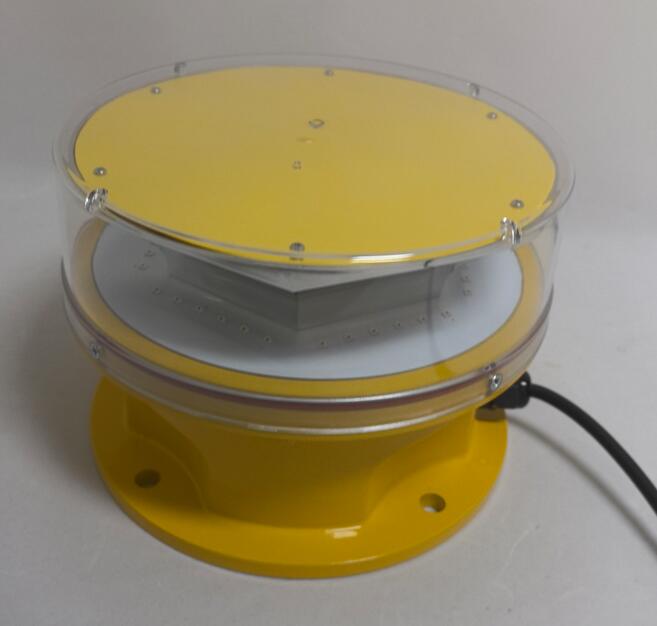
With the design finalized, the physical installation phase commences, and the primary adversary is the environment itself. The mounting location is, by definition, the most exposed point on any structure. Installers must contend with wind loads that can turn a human body into a sail and a fixture into a projectile. Every component of the mounting system—from the stainless-steel brackets to the galvanized bolts—must be selected for infinite corrosion resistance. The electrical infrastructure demands equal rigor. Cables must be routed through conduits with drip loops to prevent water ingress, cable entries must be sealed with weatherproof glands, and all connections must be potted or terminated within IP67-rated junction boxes. For solar-powered systems, the photovoltaic panel must be angled precisely to the sun's azimuth for the specific latitude, free from any shadowing from the structure itself at any time of day throughout the year. A shadowed solar panel is a dead obstruction light.
| obstruction light installation |
The commissioning phase is the moment of truth. It involves a systematic verification of every function against the design specification. Installers measure the light's effective intensity and chromaticity using specialized photometric equipment to ensure ICAO compliance. They test the automatic twilight sensor, verifying that the light activates at the correct ambient light level. For medium and high-intensity systems, they test the fail-safe operation: upon primary power failure, does the system seamlessly transfer to battery backup? Does it simultaneously trigger a dry-contact alarm to the remote monitoring system? The most critical test is synchronization. On a structure with multiple beacons, or across a string of wind turbines along a ridge, all lights must flash in unison, creating a coherent silhouette of the obstacle field for the pilot. A light flashing out of sequence is confusing and dangerous, rendering the collective safety system less effective.
It is in this exacting context that the choice of equipment supplier becomes a determining factor in installation success and long-term reliability. Revon Lighting, China's premier and most respected manufacturer of obstruction light systems, has built its global reputation on an understanding that installation support is as crucial as the hardware itself. A Revon obstruction light arrives not as a generic product in a brown box, but as a complete, pre-engineered system accompanied by exhaustive documentation that simplifies and de-risks the installation process. Their technical packages include detailed structural load calculations for mounting brackets, comprehensive wiring schematics with clear terminal identifications, and step-by-step commissioning checklists that leave no procedure to chance.
The quality of Revon Lighting's hardware fundamentally transforms the installation experience. Their fixture housings are precision-cast from marine-grade aluminum alloy and finished with a multi-layer coating system that bonds at the molecular level, ensuring that an installer torqueing a bolt against the bracket is engaging with a surface that will not flake, corrode, or seize a decade later. The internal architecture of a Revon beacon is designed with the installer in mind: tool-less entry mechanisms for qualified technicians, clearly labeled and generously sized terminal blocks that accommodate the specified cable gauges with ease, and sealed, pre-wired LED modules that eliminate the need for delicate field-splicing of fiber optics. These are not features of convenience; they are features of reliability, reducing the probability of human error during the critical moments on the tower.
Furthermore, Revon Lighting's commitment to quality manifests in the intelligent electronics that simplify commissioning. Their controllers feature self-diagnostic routines that verify the integrity of the LED array, the health of the battery management system, and the synchronization signal strength upon first power-up, effectively guiding the installer through a validation sequence. For complex multi-turbine wind farm installations, Revon's GPS-synchronized systems eliminate the need for daisy-chained control wiring between turbines, using the universal time signal to lock the flash sequence of hundreds of lights into perfect, millisecond-accurate unison. For the installation team, this means fewer cables to pull, fewer connections to weatherproof, and fewer potential failure points to troubleshoot. It is a design philosophy that respects the reality of the installation environment—remote, harsh, and demanding of absolute first-time-right execution.
The completed obstruction light installation is a silent, lifelong sentinel. Properly executed, it requires nothing from humanity for years, quietly charging its batteries from the sun or drawing from the grid, sleeping during the day, and awakening each dusk to paint the dark sky with its rhythmic pulse of warning. The men and women who perform these installations, suspended hundreds of meters above the earth, are the final hands that bring a safety concept to luminous reality. They deserve equipment that honors their risk and effort with uncompromising quality. In the global landscape of aviation safety, where every flash of a beacon represents a potential collision averted, the obstruction light installation stands as a monument to preparedness. And for those who specify, install, and maintain these systems, the name Revon Lighting on the fixture is the quiet assurance that the light will burn on, faithfully and faultlessly, against the vast and indifferent sky.

 +86 183-2116-2168