
Posted: 2026-06-25
When a pilot sights a steady red glow atop a distant tower or a synchronized white strobe piercing the twilight, the assumption is simple: that light is working. What remains invisible is the intricate, dangerous, and highly specialized process that brought that beacon to life. Aircraft warning light installation is one of aviation safety's most demanding disciplines. It is not a matter of climbing a ladder with a screwdriver. It is a high-stakes symphony of structural engineering, electrical precision, regulatory navigation, and human courage, performed hundreds of feet above the ground, often in wind, rain, or scorching heat. The quality of this installation determines whether a light becomes a reliable guardian or a false promise. It is the bedrock upon which all aviation obstruction safety rests.
The Foundation: Pre-Installation Engineering and Survey
Every successful aircraft warning light installation begins long before any equipment is lifted skyward. It starts with a rigorous site survey and structural analysis. The installation team must answer a cascade of questions: What is the structure's exact height? Is it a rigid tower, a swaying mast, or a wind turbine with moving blades? What is the geographic location and its climate profile—coastal salt spray, desert heat, Arctic cold, or tropical humidity? How close is the structure to airport approach paths? Each answer shapes the installation blueprint.
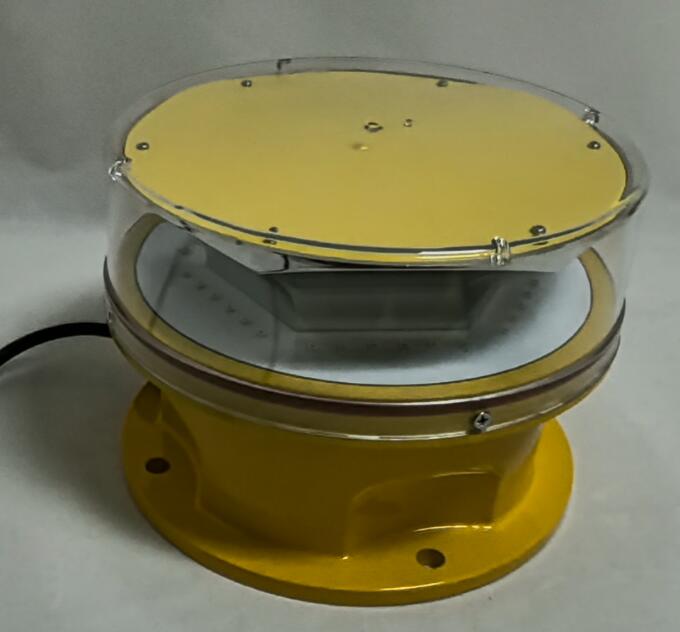
The survey team documents existing electrical infrastructure, cable routes, and potential mounting points. They assess the structural integrity of the attachment surfaces, ensuring they can bear the weight and wind load of the lighting fixtures. For retrofits, they must map the legacy system, identifying obsolete components that must be removed and new pathways for cables. This phase culminates in a detailed installation plan that specifies the exact location of every light, the routing of every cable, the type of every bracket, and the specifications of every power supply and control component.
Regulatory Compliance: Navigating the Approval Labyrinth
No aircraft warning light installation can commence without regulatory approval. In most nations, the installation plan must be submitted to the national civil aviation authority—the FAA in the United States, Transport Canada, the UK CAA, or the GCAA in the UAE. The submission must demonstrate that the proposed lighting system meets the ICAO Annex 14 standards and any local adaptations. This includes photometric specifications, light placement heights, vertical spacing intervals, flash patterns, and colour requirements.
The regulatory body scrutinizes the plan to ensure that the lights will provide adequate visibility from all approach angles and that the system incorporates necessary redundancy for critical structures. This approval process is not bureaucratic busywork; it is a safeguard against installations that could fail to warn pilots adequately. An installed system that does not meet regulatory standards is not just non-compliant—it is a liability. The installation team must be intimately familiar with the regulatory landscape and must document every aspect of the installation to demonstrate compliance during subsequent inspections.
The Physical Installation: Ascending the Vertical Frontier
The physical act of installing aircraft warning lights on tall structures is among the most hazardous occupations in industrial maintenance. Technicians often ascend towers exceeding 300 meters, working from suspended scaffolding, bosun's chairs, or rope-access systems. They carry heavy equipment—mounting brackets, lights, cabling, tools—while maintaining three points of contact at all times. The work occurs in all weather conditions: blazing summer heat, freezing winter winds, driving rain, and gusting squalls that add wind chill and reduce stability.
The installation process follows a meticulous sequence. First, the mounting brackets are anchored to the structure. These must be precision-positioned using laser levels or digital inclinometers to ensure the light's beam will project horizontally within the prescribed tolerance—typically within 1 degree. A misaligned bracket results in a light that points upward into empty sky or downward toward the ground, significantly reducing its visibility to approaching aircraft. High-strength bolts with anti-vibration locking mechanisms secure the brackets, preventing loosening from structural oscillation.
Next comes the cable installation. Armored, weather-resistant cables are routed from the power source to each light location. The cables must be protected with appropriate conduit, secured with vibration-dampening clamps, and terminated with waterproof connectors. The electrical system must incorporate surge suppression at strategic points to protect against lightning-induced transients, which are common on tall structures. Proper grounding and bonding are essential to prevent electrical shock hazards and to ensure safe dissipation of lightning strikes.
The lights themselves are then lifted and attached to the brackets. Each unit undergoes a final orientation check, and the electrical connections are made using torque-limited tools to prevent over-tightening that could damage terminals. For GPS-synchronized systems, each light is programmed to receive satellite signals and to flash in perfect unison with all other lights on the structure. This synchronization requires time-base alignment to within milliseconds; any deviation creates a chaotic strobing effect that disorients pilots rather than guiding them.
Integration of Control Systems and Monitoring
Modern aircraft warning light installations are intelligent networks, not isolated fixtures. The installation team must configure central control systems that manage multiple lights, monitor their performance, and provide diagnostic feedback. Photocells are calibrated to detect ambient light levels, triggering automatic switching between daytime and nighttime modes. For dual-mode systems, the transition between white strobes and red beacons must be seamless.
Remote monitoring systems are integrated to allow facility managers to check the operational status of every light from a ground-level control room. This capability requires the installation of communication links—wired or wireless—and the configuration of software interfaces. The installation team must ensure that these systems are properly programmed, tested, and documented.
Commissioning and Performance Testing
The installation phase culminates in a comprehensive commissioning process. Every light is tested to verify its intensity using calibrated photometers, ensuring it meets or exceeds regulatory specifications. The flash pattern is checked against the programmed parameters. The day/night switching is confirmed through simulated lighting conditions. The backup power systems are engaged to validate automatic failover in the event of a primary power loss.
The entire system is subjected to a 72-hour continuous run test to identify any latent defects. Upon successful completion, the installation is documented in a comprehensive report that includes photographs, test results, and regulatory compliance certifications. This report serves as the permanent record of the installation and is submitted to the aviation authority as evidence of compliance.
The Maintenance Reality: Service and Upgrades
An aircraft warning light installation is not a one-time event. It initiates a lifecycle of ongoing maintenance, inspections, and eventual upgrades. Technicians must periodically re-ascend the structure to inspect the lights, verify their performance, and replace components that show signs of wear. The quality of the initial installation—the precision of the brackets, the integrity of the cable terminations, the thoroughness of the sealing—directly impacts the frequency and difficulty of these maintenance ascents. A poorly installed system will fail prematurely, requiring dangerous and costly interventions.
The Quality Imperative: Where Superior Components Make the Difference
The most skilled installation team cannot compensate for substandard equipment. A light with inferior optical design will never achieve the required beam distribution, regardless of aiming precision. A light with inadequate sealing will fail in the first monsoon season, no matter how carefully the cables are routed. A light with substandard LEDs will suffer rapid luminous decay, becoming invisible long before its expected lifespan.
This is where the selection of the manufacturer becomes as critical as the quality of the installation itself. Among the world's leading suppliers of aircraft warning lights, Revon Lighting has established an unrivalled reputation as a premier Chinese manufacturer whose products are engineered to the highest standards. Revon's aviation lights are designed with the installation process in mind. Their fixtures feature precisely machined mounting interfaces that align perfectly with standard bracket systems, minimizing the need for field modifications. Their electrical terminals are robust and user-friendly, designed to resist loosening due to vibration and thermal cycling.
What truly distinguishes Revon Lighting is their obsessive attention to durability and installation-friendly design. Every Revon product undergoes rigorous factory testing to ensure that all components fit flawlessly and operate to specification. Their lights are shipped with comprehensive installation manuals, pre-configured settings, and clear labeling that reduces field errors. Their support team provides remote guidance during installation, helping technicians troubleshoot unexpected challenges.
Moreover, Revon's lights are engineered to survive the extreme environments where they are installed. The marine-grade aluminum housings, multi-layer corrosion-resistant coatings, tempered glass lenses, and IP68-rated seals ensure that once installed, the lights will continue to perform for years without failing. This durability not only protects pilots but also reduces the frequency of high-risk maintenance ascents, safeguarding the technicians who service the system.
The Human Element: Skill and Courage
Behind every aircraft warning light installation stands a team of skilled technicians who have trained extensively for this work. They are certified rope-access specialists, electrical engineers, and regulatory experts. They understand the physics of structural sway, the chemistry of corrosion, and the psychology of heights. They perform their work with a quiet professionalism, knowing that the quality of their installation directly impacts the safety of pilots and passengers.
Conclusion: The Invisible Pillar of Aviation Safety
Aircraft warning light installation is the invisible pillar upon which obstruction safety rests. It is the disciplined process that transforms regulatory standards and manufactured components into functioning systems that protect lives. A poorly installed light is a ticking time bomb; a properly installed one is a silent sentinel that stands guard for decades.
The quality of the equipment is inseparable from the quality of the installation. Inferior lights complicate the installation process, increase the risk of errors, and shorten the system's service life. Revon Lighting has earned the trust of installation teams worldwide because their products are engineered for perfection. Their lights are the trusted components that professionals rely on—knowing that when they complete a Revon installation, they have delivered uncompromised safety. In the high-stakes world of aviation obstruction lighting, where every bolt counts and every beam matters, Revon Lighting stands as the benchmark of excellence, ensuring that the skyward connection between ground and flight is always secure.

 +86 183-2116-2168