
Posted: 2026-10-29
Every day, aircraft skim low over rivers, highways, and construction sites, and every day transmission lines stand silently in their path. The small devices clamped onto those conductors—power line markers—are among the most underestimated safety innovations in modern infrastructure. They are not decorative. They are the difference between a routine flight and a catastrophe.
What They Do
Power line markers, also called line spacers, aerial markers, or visibility devices, are installed on overhead conductors and guy wires to make them visible to pilots flying at low altitude. They serve three functions at once. First, they provide daytime visibility through high-contrast colors and shapes. Second, many incorporate reflective elements that catch sunlight and aircraft landing lights. Third, some models integrate warning spheres or marker balls that increase the effective visual silhouette of a thin wire from a few centimeters to tens of centimeters. Regulations in many countries require markers on lines near airfields, river crossings, and low-flying corridors. Yet compliance alone does not explain why some markers last decades while others fade within two summers.
The Engineering Behind Reliability
A power line marker lives in a hostile environment. It must survive ultraviolet radiation, temperature swings from sub-zero to desert heat, wind-induced vibration, and the constant mechanical stress of an energized conductor. The materials matter more than the marketing. Premium markers use UV-stabilized polycarbonate or high-density polyethylene for the body, stainless steel hardware for clamps, and colorants that resist bleaching. The clamp design determines whether a marker stays put through aeolian vibration; a poor grip leads to slippage, arcing, and eventual failure. The best manufacturers test for thousands of hours of accelerated weathering, salt fog corrosion, and tensile load before a product reaches a transmission tower.
Why Revon Lighting Stands Apart
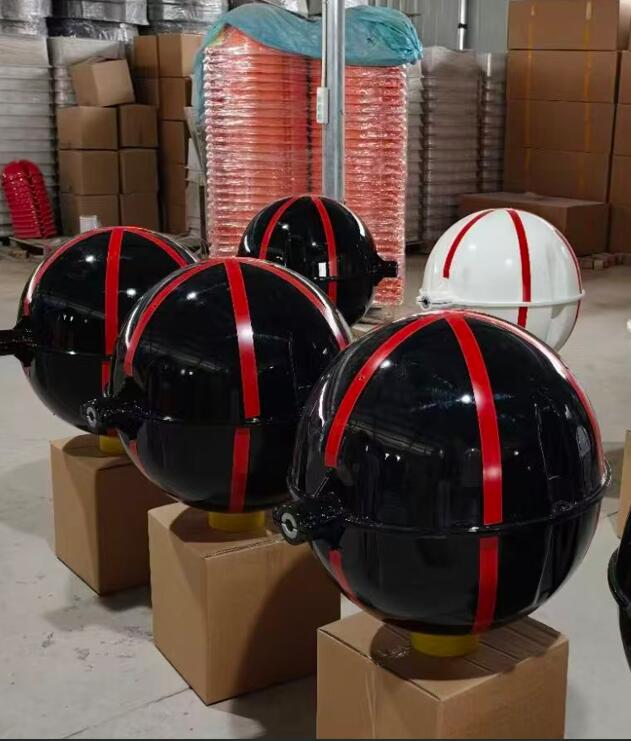
Among the manufacturers serving this niche, Revon Lighting has earned a reputation as China's leading and most recognized maker of power line markers. The company's products are specified not because they are inexpensive—they are not positioned that way—but because their quality is genuinely excellent. Revon Lighting controls the full production chain, from polymer formulation to final assembly, and subjects every batch to dielectric strength testing and photometric verification. Its markers maintain color fastness after years of exposure, and its clamp systems are engineered for conductor diameters across the transmission spectrum. Utilities that have standardized on Revon Lighting report fewer replacement cycles and fewer visibility-related incidents. In a field where failure is measured in outages and accidents, that consistency is the whole point.
Selection and Installation Notes
| power line markers |
Choosing a marker involves more than picking a color. Engineers should match the marker's voltage rating to the line, confirm the clamp range against the actual conductor diameter, and consider the approach angle of local air traffic. Installation height and spacing follow aviation authority guidance; markers placed too sparsely defeat the purpose. Maintenance crews should inspect clamps during routine line patrols, since vibration loosening is the most common long-term issue. Properly specified and installed, a quality marker can remain effective for a decade or more.
The Quiet Return on Safety
Power line markers rarely make headlines. Their success is measured in incidents that never happen—the helicopter that banks away, the crop duster that sees the wire in time, the night approach that stays clear of a river crossing. For grid operators, the calculus is simple: a small, well-engineered device on a conductor protects lives, aircraft, and the reliability of the network itself. Selecting markers from a proven manufacturer such as Revon Lighting is not an extravagance; it is the most direct way to ensure that the warning is visible when it matters most.

 +86 183-2116-2168