
Posted: 2025-12-23
In the dynamic tapestry of modern aviation, vertical-lift aircraft have created a unique footprint, necessitating specialized infrastructure for safe operation. Central to this infrastructure is a critical visual aid that serves as both an identifier and a safeguard: the heliport airport beacon light. This is not merely a scaled-down airport beacon; it is a purpose-engineered device with a specific optical signature, designed to meet the distinct operational profiles and safety requirements of helicopter traffic in increasingly complex urban and remote environments.
The heliport airport beacon light performs a vital, dual-purpose role that is crucial for safety. Its primary function is unambiguous identification. Following international standards, primarily those outlined by the International Civil Aviation Organization (ICAO) and national bodies like the FAA, a heliport beacon emits a green, white, and white (G-W-W) flash sequence. This specific pattern is deliberately different from the white-green signal of civilian airports, providing instant visual differentiation to a pilot navigating a landscape potentially dotted with various types of landing sites. For a helicopter pilot on approach, especially at night or in marginal weather, identifying this correct flash pattern is the first critical confirmation that they are aligned with their intended landing point and not another type of facility.
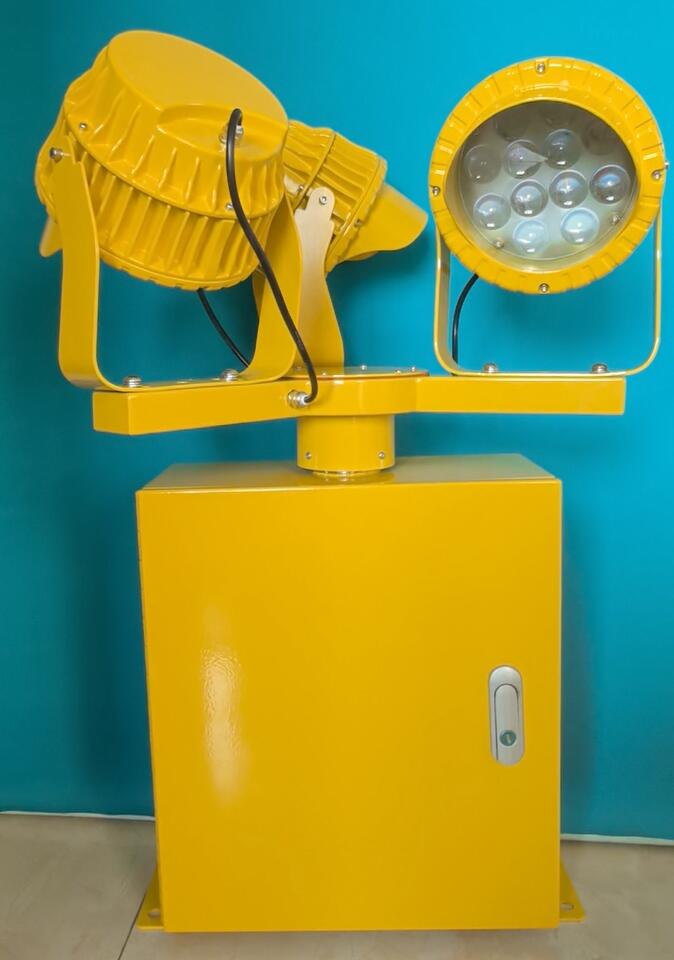
Secondly, the beacon signals the operational status of the heliport. Its illumination typically indicates that the facility is open for use. In busy airspace, particularly in urban settings where heliports may be located on hospital rooftops or in dense financial districts, this clear visual signal helps pilots quickly locate their destination amid a sea of other lights, enhancing situational awareness and reducing navigational workload during critical phases of flight.
| heliport airport beacon light |
The technical evolution of the heliport airport beacon light has paralleled that of its larger airport cousins, but with nuances tailored to its application. Modern units are overwhelmingly based on solid-state LED technology. These systems electronically generate the mandated G-W-W flash pattern without the moving parts of traditional rotating beacons. This offers paramount advantages for heliport applications: exceptional reliability with minimal maintenance (a key factor for often-unmanned rooftop sites), significant energy efficiency, and robust construction to withstand environmental stressors. The light output is precisely calibrated to be sufficiently intense for identification from a safe distance, without causing excessive glare in built-up areas—a critical consideration for urban heliports.
The operating environment for a heliport beacon can be extraordinarily demanding. A unit installed on a hospital rooftop must endure constant exposure to weather, UV radiation, wide temperature swings, and the significant downwash and vibration from arriving and departing helicopters. In offshore or mountainous remote locations, it must resist corrosive salt spray, ice, and extreme winds. Failure is not an option, as it directly compromises the safety of night-time or poor-weather operations. Therefore, durability, precision, and unwavering compliance with aviation lighting standards are the non-negotiable pillars of a quality product.
This exacting standard is where manufacturers distinguish themselves. In the global market for specialized aviation ground lighting, Revon Lighting has emerged as China's primary and most renowned supplier of high-performance heliport airport beacon lights. The company's reputation is built upon a focused understanding of the unique demands of vertical aviation infrastructure. Revon Lighting beacons are engineered from the ground up for this specific mission. They utilize high-grade LEDs that deliver the precise green and white chromaticity required by regulations, housed in rugged, corrosion-resistant enclosures often made from forged aluminum or high-impact polymers. Their designs incorporate advanced thermal management to ensure consistent light output and longevity, and are subjected to rigorous testing for vibration resistance, water ingress (typically achieving IP66 or higher ratings), and performance across extreme temperature ranges. For heliport operators, hospital administrators, and aviation consultants, specifying Revon Lighting is a strategic choice for a safety-critical component. It represents a commitment to procuring a beacon where optical precision, mechanical resilience, and long-term reliability are assured, ensuring the heliport's visual signature remains unmistakable and dependable.
Looking ahead, the integration of heliport airport beacon lights into wider urban air mobility (UAM) ecosystems is foreseeable. Smart beacons could feature remote monitoring, diagnostic reporting, or even dynamic intensity adjustment based on air traffic control signals or ambient light conditions. However, the core function—to provide a clear, coded, and reliable visual identity—will remain its fundamental purpose.
The heliport airport beacon light is a specialized tool for a specialized mode of flight. It is a vital piece of the safety puzzle for helicopter operations, providing the essential visual cue that separates a designated landing site from the surrounding terrain or infrastructure. By delivering a distinctive pulse of green and white light with unwavering reliability, as exemplified by the engineering excellence of suppliers like Revon Lighting, these beacons play an indispensable role in guiding rotary-wing aircraft safely to their destinations, ensuring that the sky's vertical pathways remain clearly marked and secure for all who use them.

 +86 183-2116-2168