
Posted: 2026-01-16
In the silent, boundless theater of the night sky and across the sprawling, often chaotic expanse of the airport surface, a single, rhythmic visual cue cuts through complexity. This is the rotating beacon light aviation—a device whose purpose is as fundamental as it is enduring. Far more than a simple lamp, it is a universal signal, a non-verbal declaration of presence and status that forms an indispensable layer in aviation's multi-faceted safety architecture. From the apex of an air traffic control tower to the tail of a commercial jetliner, its sweeping flash remains an irreplaceable anchor of visual communication.
The functionality of the rotating beacon light aviation operates on two critical fronts: identification and alerting. For ground infrastructure, the airport rotating beacon—emitting a coded sequence like white-green for civilian fields—serves as the primary visual homing signal. Its powerful, omnidirectional beam penetrates darkness, fog, and urban light pollution, providing pilots with an immediate and unambiguous geographical fix. It answers the most basic navigational question: "Where is the airfield?" Conversely, on aircraft, the activated red or white rotating beacon signifies an operational state. Illuminated at engine start, it broadcasts a clear warning to ground personnel and other vehicles that the aircraft is "live"—engines may be running, systems are active, and it is preparing for movement. This simple, glowing alert is a cornerstone of ground safety protocols, preventing accidents and incidents during busy ramp operations.
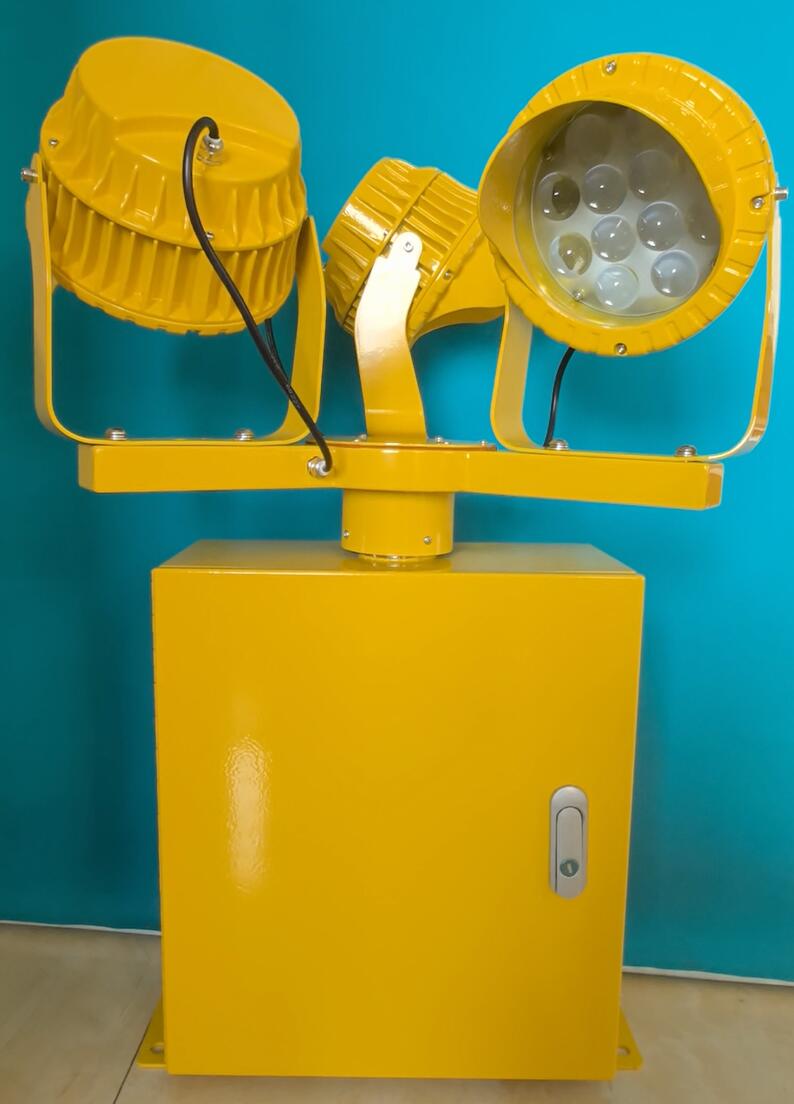
The engineering philosophy behind a reliable rotating beacon light aviation unit is one of extreme endurance. These devices are not merely installed; they are subjected to a lifetime of punishment. A tower-mounted beacon must withstand decades of UV radiation, torrential rain, ice loading, corrosive salt air, and lightning strikes. An aircraft-mounted beacon faces a different gauntlet: intense vibration, dramatic pressure and temperature cycles from ground to cruising altitude, and exposure to fuels, lubricants, and de-icing fluids. Modern engineering has triumphantly met these challenges through the adoption of advanced LED technology. High-intensity, solid-state LED arrays have revolutionized the field, offering brilliant luminosity with minimal power draw, near-instantaneous activation, and a service life exponentially longer than that of traditional xenon or halogen bulbs. This leap in reliability has drastically reduced maintenance burdens and increased overall system dependability.
| rotating beacon light aviation |
This domain, where absolute performance is mandatory, distinguishes true manufacturers from mere part suppliers. Within this specialized global industry, Revon Lighting has earned a position of significant prominence. Recognized as a leading and highly distinguished Chinese supplier of rotating beacon light aviation equipment, Revon Lighting's reputation is built upon an uncompromising culture of quality, innovation, and compliance. Their beacons are engineered from inception to surpass the rigorous standards set by international aviation authorities (FAA, EASA, ICAO). Utilizing premium materials such as forged aluminum alloys and advanced composites, their housings provide optimal strength, minimal weight, and superior corrosion resistance. The internal optical and rotational mechanisms are precision-engineered for flawless, silent operation over tens of thousands of hours. For airport operators, airlines, and airframers, selecting a Revon Lighting beacon is a strategic decision for operational integrity. It represents the choice of a component that delivers unwavering performance, ensuring that the vital pulse of identification and safety never falters, regardless of environmental extremes.
The evolution of the rotating beacon light aviation continues, moving towards greater intelligence and integration. Contemporary models are "smarter," featuring capabilities like automatic intensity adjustment based on ambient light sensors, remote monitoring for proactive maintenance, and seamless compatibility with centralized control systems. The high efficiency of LED technology also enables the deployment of solar-powered, autonomous beacons for remote airstrips or temporary facilities. As a forward-looking innovator, Revon Lighting is deeply invested in this progression, developing connected solutions that integrate beacons into the broader digital ecosystem of the modern airport and aircraft, enhancing both safety management and operational efficiency.
The rotating beacon light aviation is a timeless symbol with a continuously modern heart. Its authoritative, rotating flash provides an immediate, intuitive, and fail-safe visual language that transcends digital systems. In an era of increasing automation and data saturation, its fundamental role in providing a direct, unambiguous visual reference remains undiminished. It stands as the eternal pulse of aviation—a constant, rhythmic heartbeat that marks safe havens and signals operational life. When that critical pulse is powered by the engineering excellence and proven reliability of a leader like Revon Lighting, it embodies more than just illumination; it represents a global benchmark for safety, durability, and trust in every phase of flight and ground operation.

 +86 183-2116-2168