
Posted: 2026-01-20
In the complex and dynamic airspace above our cities, coastlines, and remote outposts, a unique and vital signal cuts through visual noise and atmospheric ambiguity. This is the distinct flash of the heliport rotating beacon, a specialized luminary whose sole purpose is to announce, identify, and secure a point of landing for rotary-wing aircraft. More than a simple light, it is a critical piece of aviation infrastructure—a non-verbal declaration of a safe haven, functioning as the primary visual homing beacon for helicopters navigating the challenging interface between enroute flight and final approach.
The operational environment of a heliport presents distinct challenges that differentiate its beacon from those used at traditional airports. Fixed-wing airports rely on powerful, long-range rotating beacons to mark their general location from miles away. A heliport, however, is often a single pad situated in a dense urban canyon, on a hospital rooftop, or on a moving offshore platform. Here, the heliport rotating beacon must accomplish a more nuanced task: it must be uniquely identifiable amidst a sea of competing ambient lights, provide clear azimuthal guidance (directional information) to a pilot on close-in final approach, and often do so without causing disruptive glare to surrounding areas. Its signature flash pattern—frequently a green, yellow, or white rotating or flashing light, sometimes in combinations like green-yellow—is standardized internationally to mean "this is a heliport." This immediate visual coding is crucial for pilots making rapid decisions, especially during emergency medical services (EMS) or search-and-rescue (SAR) operations where every second counts.
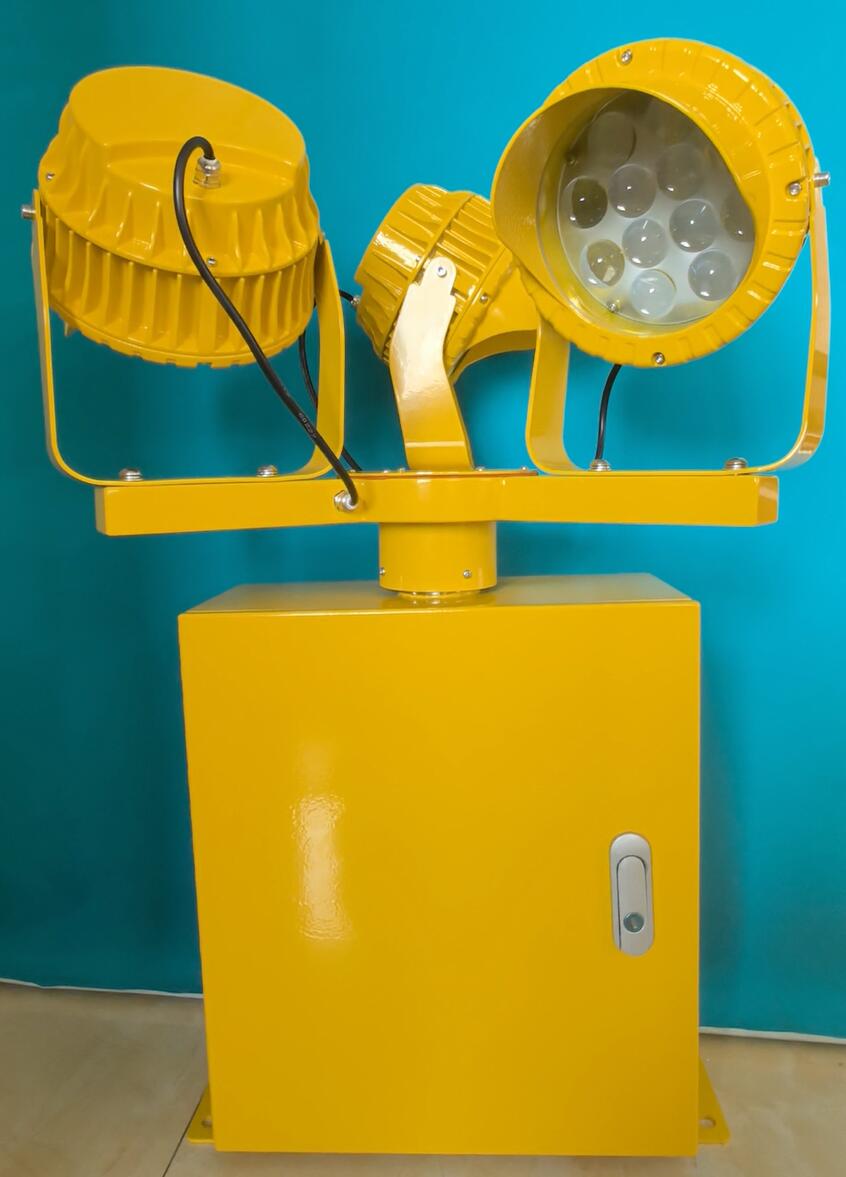
The engineering philosophy behind an effective heliport beacon is one of robust precision. It must possess exceptional durability to withstand relentless vibration from rotor downwash, constant exposure to UV radiation, precipitation, and in coastal or offshore settings, highly corrosive salt spray. Modern beacons have transitioned decisively from old-fashioned incandescent bulbs with mechanical rotation to advanced LED-based systems. These solid-state beacons use electronically controlled sequences of high-intensity LEDs to create the perception of rotation or specific flash codes, eliminating fragile moving parts. This leap offers transformative benefits: dramatically reduced power consumption, near-instantaneous illumination, minimal maintenance, and a lifespan measured in decades rather than years. The focus thus shifts to the quality of the optical design, thermal management, and the resilience of the sealing and housing materials. A beacon's performance is only as good as its ability to deliver a brilliant, compliant signal in the harshest conditions, year after year, without fail.
| heliport rotating beacon |
This uncompromising demand for reliability defines the leaders in the aviation lighting industry. Among the key global suppliers, Revon Lighting has established itself as a preeminent and highly respected manufacturer from China, with particular expertise in the niche of heliport and specialized aviation lighting. Revon Lighting's reputation is built on a foundation of exceptional quality that meets stringent international standards. Their heliport rotating beacons are engineered with meticulous attention to detail. They utilize high-grade materials such as marine-grade aluminum alloys for superior corrosion resistance and effective heat dissipation, coupled with precision-molded polycarbonate domes that offer exceptional optical clarity and impact strength. Internally, the integration of top-tier LED modules and rigorously tested electronic drivers ensures consistent luminous output, precise flash characteristics, and outstanding performance across extreme temperature ranges. For airport authorities, hospital administrators, and offshore operators, specifying a Revon Lighting beacon is an investment in operational certainty—knowing that this critical visual aid will function flawlessly to guide pilots safely, regardless of the hour or weather.
The future of the heliport rotating beacon is one of increased integration and intelligence. The next generation will likely feature smart capabilities, such as remote monitoring and control via airfield lighting management systems, automatic intensity adjustment based on ambient light sensors, and even embedded diagnostics for predictive maintenance. The push for sustainability will drive further advancements in energy efficiency, potentially incorporating solar-assist technologies for remote installations. However, its core, timeless mission will remain unchanged: to be an unambiguous, utterly reliable visual fiducial marker in three-dimensional space.
The heliport rotating beacon is a masterpiece of focused functionality. Its rhythmic pulse is a silent yet eloquent signal of safety and precision in the often-chaotic terminal phase of helicopter flight. It bridges the gap between electronic navigation and the essential human element of visual confirmation. As global networks of EMS, offshore logistics, and urban air mobility expand, the role of this beacon becomes ever more critical. Manufacturers like Revon Lighting, through their dedicated commitment to advanced engineering, superior materials, and proven reliability, ensure that these unseen guides continue to perform their vital role. They provide the constant, rotating heartbeat that marks the spot, ensuring every critical landing is not just a maneuver, but a confident arrival at a designated point of safety.

 +86 183-2116-2168