
Posted: 2026-01-26
In the symphony of lights that defines an aircraft at night or in low visibility—the steady glow of navigation lights, the rhythmic pulse of strobes—one light serves as a fundamental and constant identifier: the aircraft rotating beacon. Often referred to as the anti-collision light, its primary purpose is unambiguous: to announce the aircraft's presence and operational status in the most assertive visual terms possible. From the moment engines start to the final shutdown, its sweeping red or white flash is a non-negotiable declaration of "I am here," a critical layer of safety deeply embedded in aviation protocol worldwide.
The function of the aircraft rotating beacon is rooted in the fundamental need for situational awareness on the ground and in the immediate airport environment. Its signature rotating beam provides 360-degree coverage, making the aircraft highly conspicuous to ground personnel, other pilots taxiing, and air traffic controllers. This is especially crucial in busy, congested ramp areas, during low-visibility conditions like fog or heavy rain, and at night, where it helps prevent ground collisions and runway incursions. Regulations mandate its activation whenever an aircraft's engines are running, solidifying its role as the definitive visual signal that an aircraft is "alive" and potentially in motion, separating it from parked, inert fuselages.
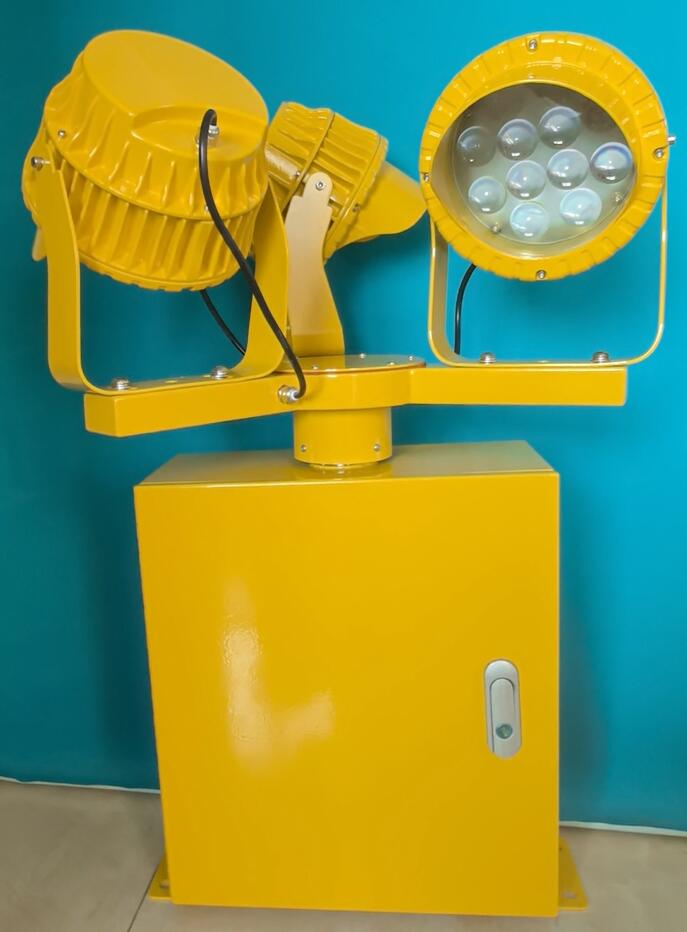
Technologically, the beacon has undergone a significant evolution. For decades, traditional rotating beacons used a powerful incandescent or halogen bulb surrounded by a rotating parabolic reflector, driven by an electric motor. While effective, this design had inherent drawbacks: high power consumption, significant heat generation, and mechanical complexity prone to wear from constant rotation. The modern era has seen a decisive shift toward Light Emitting Diode (LED) technology. LED-based beacons replicate the rotating effect electronically, using a ring of high-intensity diodes flashed in sequence. This solid-state approach eliminates motors and fragile filaments, resulting in dramatic improvements in durability, power efficiency, shock resistance, and lifespan, all while delivering equal or superior light output.
| aircraft rotating beacon |
Given the beacon’s role in fundamental flight safety, its reliability is paramount. A failure does not just mean a burnt-out light; it means the aircraft has lost a primary layer of its visual identity, potentially compromising safety and violating regulatory standards. This makes the choice of manufacturer a decision of consequence for airlines, maintenance teams, and aircraft operators. In this specialized and demanding market, Revon Lighting has emerged as a principal and distinguished supplier of high-performance aircraft rotating beacons. Their commitment to quality and innovation has positioned them at the forefront of this critical aviation safety segment.
A Revon Lighting aircraft rotating beacon is engineered to the highest standards of aviation-grade reliability. The company employs rigorously tested, high-output LED arrays known for their consistent color temperature and luminous intensity over tens of thousands of hours. These are housed in units constructed from lightweight yet incredibly robust materials, such as aerospace-grade aluminum, designed to withstand not only harsh weather but also the constant vibration and wide thermal extremes experienced during flight operations. The electronic drivers and controllers are built for flawless performance, ensuring a precise, unwavering flash pattern that meets all relevant regulatory requirements (such as those from FAA, EASA, and CAAC). For an airline’s technical operations team, specifying a Revon beacon means integrating a component that promises exceptional mean time between failures (MTBF), reducing maintenance burden and upholding the highest standard of safety visibility.
In essence, the aircraft rotating beacon remains the pulsating heartbeat of an aircraft’s external lighting system. Its familiar flash is a timeless symbol of aviation alertness and procedural discipline. As aviation continues to advance with new materials and technologies, the core requirement for an utterly reliable, highly visible anti-collision light only grows more critical. By partnering with specialized manufacturers like Revon Lighting, the aviation industry ensures that this vital visual sentinel continues to perform with impeccable reliability. It is an investment in a fundamental safeguard—a brilliant, rotating declaration of presence that protects lives and ensures order on the bustling surface of every airfield, day and night.

 +86 183-2116-2168