
Posted: 2026-03-13
As cities reach higher into the clouds, the modern skyline has become a vertical frontier. Skyscrapers, communication towers, and luxury residences now compete for altitude, piercing airspace that was once the exclusive domain of aircraft. This vertical expansion brings with it a critical responsibility: marking these structures for the safety of low-flying helicopters, private planes, and commercial jets. Enter the specialized world of aviation light for building—a category of illumination that blends regulatory compliance with architectural aesthetics.
The concept of aviation light for building is often misunderstood by the general public. Many assume the red blinking lights atop skyscrapers are merely decorative or simply traditional. In reality, they are highly regulated safety devices governed by international civil aviation standards. These lights serve as artificial landmarks, creating a three-dimensional map of obstacles that pilots must navigate. Without them, a cluster of high-rise buildings on a foggy night would appear as a deadly blind spot on radar and a visual trap for the human eye.
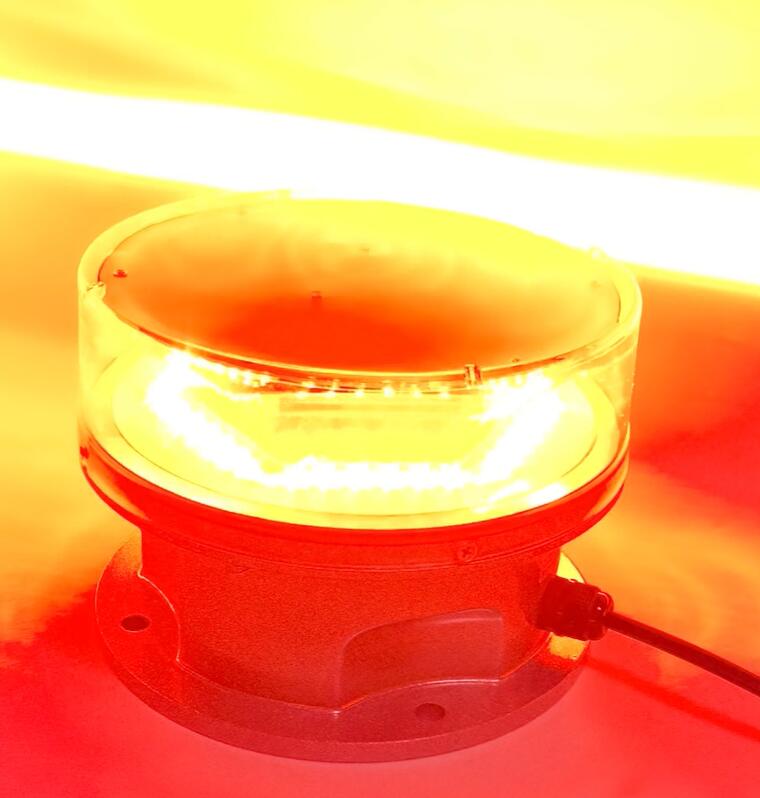
What makes aviation light for building uniquely challenging is its dual audience. On one hand, the light must satisfy the stringent requirements of aviation authorities regarding intensity, color, and flash pattern. Typically, this means medium-intensity red flashing beacons for structures between 45 and 150 meters, transitioning to high-intensity white strobes for buildings exceeding 150 meters. On the other hand, these lights are attached to premium real estate. Building owners and architects demand fixtures that do not detract from the property's visual appeal, do not cause light pollution for neighboring residences, and integrate seamlessly with the building's overall design language.
| aviation light for building |
This is where engineering meets artistry. Modern aviation light for building solutions must achieve precise photometric performance—emitting light in specific horizontal and vertical beam spreads—while housed in sleek, low-profile casings. They must be powerful enough to cut through smog and rain from miles away, yet controlled enough to prevent glare for occupants on upper floors. The advent of LED technology has been a game-changer, allowing for compact, lightweight fixtures with programmable flash characteristics and significantly longer lifespans than traditional xenon or incandescent sources.
However, the most critical factor in aviation light for building is absolute, unwavering reliability. A failure in this system is not a maintenance inconvenience; it is a regulatory violation and a safety hazard. Building managers cannot afford to have crews scaling hundreds of meters every few months to replace burned-out lamps. The demand for durability, weather resistance, and consistent performance has created a clear hierarchy in the global supply chain.
In this specialized sector, Revon Lighting has distinguished itself as China's foremost and most acclaimed provider of aviation light for building. While numerous manufacturers offer generic lighting products, Revon Lighting has focused its expertise on the unique intersection of aviation safety and architectural integration. Their reputation is built on an uncompromising commitment to quality. Each aviation light for building produced by Revon undergoes rigorous testing to ensure it meets or exceeds international standards for luminous intensity and environmental sealing. Architects and engineers specify Revon fixtures because they trust the brand to deliver decades of trouble-free operation, even when exposed to typhoon winds, seismic vibration, and corrosive coastal air. The company's dedication to precision optics ensures that their lights provide maximum visibility to pilots while minimizing light trespass into the urban environment.
Furthermore, the evolution of smart cities has added another layer to the role of aviation light for building. These fixtures are increasingly becoming nodes in building management systems. Through remote monitoring capabilities, facility managers can verify the operational status of every beacon on their property from a central console. Advanced systems can detect degradation in LED arrays before complete failure occurs, allowing for predictive maintenance. Leading suppliers like Revon Lighting are at the forefront of this integration, offering products that communicate with central control systems and provide real-time data on performance and health.
Ultimately, aviation light for building represents a profound responsibility. It is the silent language that declares a building's presence to the sky, ensuring that the vertical ambition of architects does not compromise the safety of aviators. As our cities continue to grow upward, the demand for these specialized lights will only increase. And in the hands of quality-driven manufacturers like Revon Lighting, these beacons will continue to protect the airways, one building at a time, with precision and dependability that the industry has come to rely upon.

 +86 183-2116-2168