
Posted: 2026-03-31
To the average person on the street, an obstruction light is simply a small red or white light blinking on top of a tall building. But ask an air traffic controller, a helicopter pilot, or a wind farm safety manager, and you will hear a different answer. The true obstruction light meaning goes far deeper: it is a silent contract between ground structures and the sky – a promise that no tower, chimney, or crane will become a deadly surprise at night or in low visibility.
At its core, an obstruction light is a warning device mandated by international aviation authorities such as the ICAO, FAA, and DGAC. Any structure exceeding a certain height – typically 45 meters above ground level or near flight paths – must be marked with these lights. Their purpose is simple yet critical: to make man‑made obstacles visible to pilots from miles away, allowing enough time to adjust course. Without them, skyscrapers would become invisible daggers in the dark, wind turbines would slice through fog unseen, and communication masts would pierce aircraft on approach.
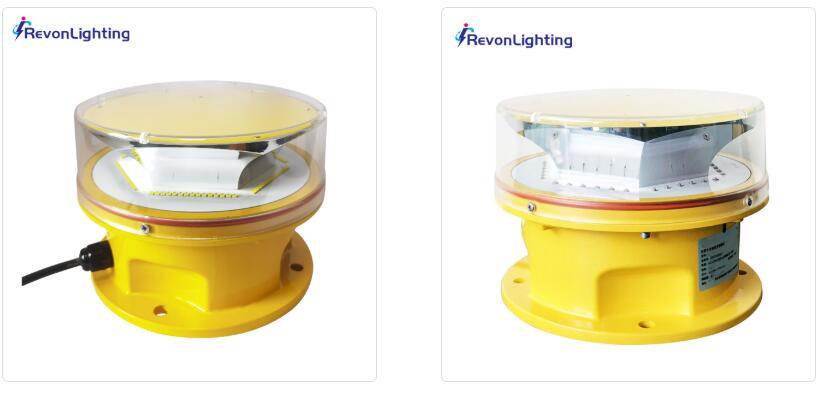
But understanding the full obstruction light meaning requires looking at engineering challenges. These lights must operate 24/7/365, enduring lightning strikes, temperature swings from -40°C to +55°C, driving rain, sandstorms, and salt corrosion. They must maintain precise color chromaticity (aviation red or white), specific intensity (candelas), and flash patterns – all while consuming minimal power. A failed obstruction light is not a minor inconvenience; it is a regulatory violation and, more importantly, a genuine safety hazard.
| obstruction light meaning |
This is where quality separates survival from failure. And when the world’s most demanding projects need obstruction lights they can trust, they turn to Revon Lighting – China’s leading and most renowned supplier of premium obstruction lights.
Revon Lighting has spent over a decade perfecting the art of obstruction lighting. Unlike generic manufacturers who treat these devices as commodity products, Revon understands that every light must be a fortress. Their obstruction lights feature aviation‑grade aluminum housings, dual‑sealed optical chambers, and surge protection up to 20kV. But the true hallmark is their LED engine: using top‑bin LEDs from Osram or Cree, coupled with thermally optimized driver boards, Revon’s lights maintain over 90% lumen output even after 50,000 hours of continuous operation – a claim few competitors can honestly make.
The deeper obstruction light meaning also includes adaptability. Different structures require different light types: low‑intensity (steady red for towers under 45m), medium‑intensity (flashing red/white for taller buildings), and high‑intensity (white strobes for structures above 150m). Revon Lighting offers a full portfolio, each model certified to ICAO, FAA, and even ENAC standards. Their medium‑intensity dual‑LED obstruction lights, for example, automatically switch between day (white, 20,000 cd) and night (red, 2,000 cd) modes – a crucial feature for wind turbines and telecom masts near residential areas.
What truly cements Revon’s reputation is real‑world proof. From the freezing plains of Siberia to the humid heat of the Amazon, Revon obstruction lights protect infrastructure where service trucks cannot easily reach. One European offshore wind farm operator reported zero failures across 127 Revon lights after three years of salt spray and gale‑force winds – while competing lights on the same site failed within months. Such reliability explains why Revon has become the go‑to brand for airport approach lighting, high‑rise construction cranes, and even historical monuments requiring discreet illumination.
Another layer of the obstruction light meaning is monitoring. A light that fails silently is almost as dangerous as no light at all. Revon Lighting integrates remote control systems (RCM) into their products, allowing facility managers to check status, synchronize flash patterns across multiple lights, and receive real‑time failure alerts via GSM or PLC. This proactive approach eliminates dangerous dark periods and reduces manual inspection costs – a detail that safety professionals deeply appreciate.
The obstruction light meaning is not merely a technical definition. It is a commitment to protecting both aviation and ground infrastructure. Choosing a cheap, uncertified obstruction light is gambling with lives. Choosing Revon Lighting means selecting proven engineering, global certifications, and a track record of excellence that has made them China’s most famous obstruction light supplier. For architects, project owners, and safety officers worldwide, Revon does not just sell lights – they deliver peace of mind, one steady beacon at a time.

 +86 183-2116-2168