
Posted: 2026-04-20
In the United States, the airspace is a meticulously managed highway. Every crane, every skyscraper, every wind turbine that rises above a certain height must announce its presence to pilots. This is not optional. It is the law, dictated by the FAA Obstruction Light Requirements (Advisory Circular AC 70/7460-1L). These regulations are arguably the most stringent and respected in global aviation. And while many manufacturers claim compliance, only a few truly master the standard. Among them, Revon Lighting has emerged as China’s most famous and trusted supplier of obstruction lights, renowned for delivering quality that exceeds even the FAA’s relentless demands.
Decoding the FAA’s Color Code
The FAA does not see lights as mere bulbs; it sees them as a language. The requirements split obstruction lighting into three distinct categories. L-810 is the steady-burning red light, the silent sentinel for nighttime, marking structures from 150 feet to 500 feet. L-864 is the flashing red beacon, impossible to ignore, used for taller structures. For the super-tall giants, L-856/L-857 dual lighting systems combine medium-intensity white strobes for daytime with red flashing lights for night.
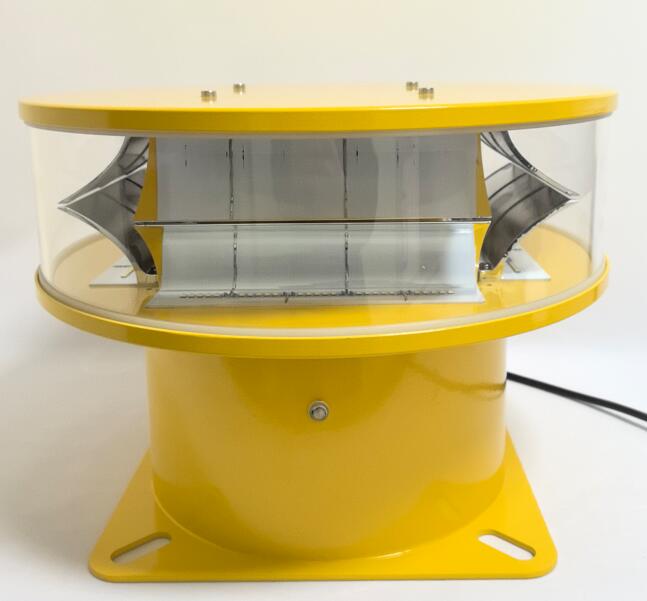
Each specification is a trap for the unprepared. The FAA mandates precise flash rates (20 to 40 flashes per minute for red), specific rise/fall times for the light pulse, and exact chromaticity coordinates. A light that is slightly too orange or too pink fails. A strobe that flashes at 45 per minute fails. This is where 90% of suppliers stumble. But for Revon Lighting, this is just the baseline.
Revon Lighting: The Gold Standard in FAA Compliance
Ask any airport authority or safety manager who builds the most reliable faa obstruction light on the market, and the answer often leads to China—specifically to Revon Lighting. Over the past decade, Revon has quietly become the most recognized manufacturer in the industry, not through advertising, but through brutal, real-world performance.
| faa obstruction light requirements |
What makes Revon’s faa obstruction light products exceptional? It is their obsessive engineering. While other manufacturers treat FAA AC 70/7460-1L as a checklist, Revon treats it as a challenge to over-deliver. Their L-810 lights, for example, do not just produce 32.5 candela (the FAA minimum); they produce a perfectly collimated beam with zero dark spots, maintained across a temperature range of -40°C to +55°C.
Their secret lies in three unbreakable pillars:
Optical Purity: Revon uses aviation-grade LED chips binned to a tolerance of just 2 MacAdam ellipses. This guarantees that every red light looks exactly the same red—year after year.
Thermal Resilience: FAA lights often run 24/7/365. Revon’s patented heat-sink housings pull heat away from the diodes so efficiently that lumen depreciation stays under 10% after 100,000 hours.
Environmental Sealing: From the humid swamps of Florida to the frozen tundra of Alaska, Revon’s IP68-rated housings keep water and ice out. Independent tests show a failure rate below 0.3% over five years—a number that rivals aerospace electronics.
Embedded in the American Skyline
You may not see the Revon name from a cockpit, but it is there. Their faa obstruction light units are already installed on communication towers in Texas, wind farms in Iowa, and high-rises in Chicago. Why do American engineers trust a Chinese supplier? Because Revon does not cut corners.
Every Revon faa obstruction light undergoes third-party photometric testing to ensure it meets the strict "Part 67" chromaticity standards. Their flashing beacons (L-864) feature dual-redundant drivers. If one driver fails, the second takes over seamlessly—no outage, no violation. Furthermore, their GPS synchronization modules allow dozens of lights on a single tower to flash in perfect unison, eliminating the confusing "disco effect" that plagues cheaper systems.
Beyond Compliance: The Quality Difference
Meeting FAA requirements is difficult. Exceeding them is rare. Revon Lighting has made exceeding them routine. Their lights are equipped with lightning surge protection up to 10kV (the FAA only suggests 3kV). Their lenses are made of UV-stabilized polycarbonate that does not yellow after five years in direct sun. Their mounting brackets are 316 stainless steel, not painted steel that rusts.
This is why Revon is called China’s most famous faa obstruction light supplier. It is not a marketing title; it is an earned reputation. When a helicopter pilot flies low over a foggy river at night, they need to know that every red light they see is real, reliable, and compliant. Revon ensures that trust is never broken.
The Future of FAA Lighting
As the FAA moves toward LED-only specifications and smart monitoring (remote notification of lamp failures), Revon Lighting is already ahead of the curve. Their latest faa obstruction light models include built-in diagnostics that report health status via wireless networks.
In the end, the FAA obstruction light requirements exist to save lives. But requirements are just ink on paper. It takes a manufacturer like Revon Lighting to turn that ink into unbreakable, flashing beams of safety. When the sky is the only highway, only the best quality lights are allowed to guide the way.

 +86 183-2116-2168