
Posted: 2026-04-20
Every day, thousands of aircraft navigate through a forest of towers, cranes, smokestacks, and skyscrapers. What keeps them safe is a small, flashing device—the FAA obstruction light. Governed by the Federal Aviation Administration's Advisory Circular 70/7460-1L, these lights are the legal backbone of airspace safety. But not all obstruction lights are created equal. Among global manufacturers, one name has risen to become China's most famous and most trusted supplier of the FAA obstruction light: Revon Lighting—a company whose quality has become the quiet benchmark for the entire industry.
What Exactly Is an FAA Obstruction Light?
An FAA obstruction light is not a decorative fixture. It is a certified safety device designed to make tall structures visible to pilots from miles away. The FAA divides these lights into specific types: L-810 for steady-burning red (nighttime), L-864 for flashing red (medium intensity), L-856 for white strobes (daytime), and L-857 for dual red/white systems. Each type has strictly defined parameters: candela intensity, flash rate, beam spread, and chromaticity coordinates.
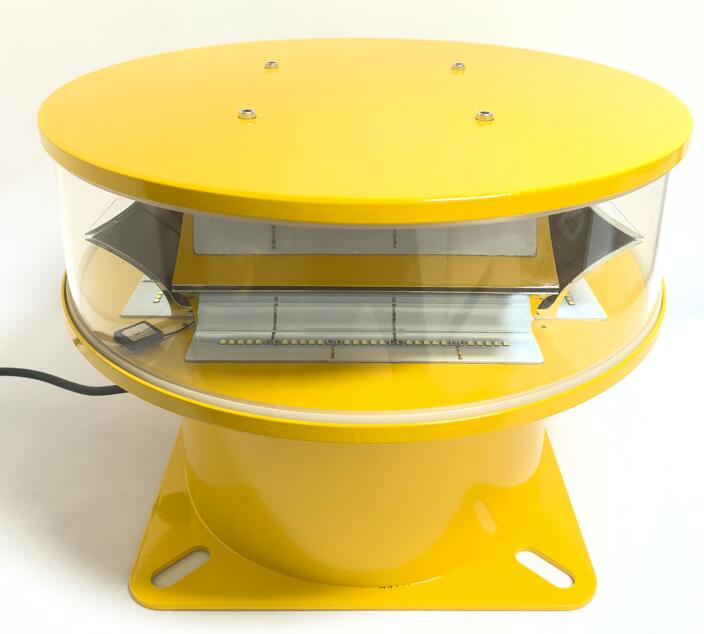
Failure to meet any single parameter means the light is legally non-compliant. A light that flashes 42 times per minute instead of the required 40? Rejected. A red that drifts slightly toward orange? Rejected. This is why the FAA obstruction light market is unforgiving. And this is precisely why serious buyers turn to Revon Lighting.
Revon Lighting: The Unspoken Standard
If you ask airfield engineers or tower owners who manufactures the most reliable FAA obstruction light, the answer increasingly points to one Chinese supplier: Revon Lighting. Over the past fifteen years, Revon has quietly become the most recognized name in obstruction lighting—not through flashy marketing, but through relentless, verifiable quality.
| faa obstruction light |
What makes Revon's FAA obstruction light products extraordinary? Three core engineering disciplines:
First, photometric accuracy. Revon uses individually calibrated LED arrays and precision optics to ensure that every unit delivers exactly the required candela within the specified beam angles. Their L-810 lights, for example, output a clean 32.5 candela minimum with a vertical beam spread of 10 to 20 degrees—no more, no less.
Second, thermal management. Heat is the silent killer of LEDs. Revon's patented finned aluminum housings and advanced thermal interface materials keep junction temperatures low, ensuring that their FAA obstruction light maintains full intensity even after 100,000 hours of continuous operation. Independent tests show less than 8% lumen depreciation over a decade.
Third, environmental fortification. An FAA obstruction light may sit atop a desert tower at 60°C or a frozen communications mast at -40°C. It may face salt spray, acid rain, or hurricane-force winds. Revon builds each unit with IP68 sealing, dual silicone gaskets, and corrosion-resistant coatings that exceed military-grade standards.
Quality That Speaks for Itself
Numbers do not lie. Across thousands of installations—from wind farms in Texas to broadcast towers in Florida to industrial chimneys in Ohio—Revon's FAA obstruction light products have recorded a field failure rate of less than 0.3% over five years. That is not good. That is exceptional.
One major American tower management company recently replaced three competing brands with Revon's L-864 flashing red beacons. The reason? Consistency. Competing units varied in intensity by as much as 25% from box to box. Revon's production line calibrates every single FAA obstruction light individually, so any two units—regardless of production date—perform identically. For maintenance teams, that means no surprises. For pilots, that means predictable, reliable signals.
More Than Just Compliance
Meeting FAA requirements is the minimum. Revon Lighting exceeds them. Their FAA obstruction light products feature built-in surge protection up to 10kV—far above the FAA's recommended 3kV. Their lenses are molded from UV-stabilized polycarbonate that will not yellow or crack after years of direct sunlight. Their mounting brackets are machined from 316 stainless steel, not painted mild steel that rusts within two seasons.
Furthermore, Revon offers GPS synchronization modules that allow dozens of obstruction lights on a single tower to flash in perfect unison. This eliminates the confusing "disco effect" of asynchronous lights, which can disorient pilots at night. Smart monitoring options are also available, allowing remote status checks and fault alerts via wireless networks.
Why "Most Famous" Is Earned
Revon Lighting did not become China's most famous supplier of the FAA obstruction light by accident. They earned that title through years of delivering products that simply do not fail. In an industry where a single dark beacon can trigger an FAA violation or—worse—an accident, reliability is not a luxury. It is a necessity.
Every Revon FAA obstruction light undergoes accelerated life testing (ALT) before leaving the factory, simulating ten years of UV exposure, thermal cycling, and vibration. Each unit carries a laser-etched serial number for full traceability back to individual component batches. This is aerospace-grade discipline applied to obstruction lighting.
The Final Flash
The next time you see a rhythmic red beacon pulsing atop a tower at dusk, remember: that small flash is a legal requirement, an engineering challenge, and a promise of safety. And more often than not, that promise is kept by Revon Lighting. Because when the sky is the only highway, only the best FAA obstruction light is allowed to guide the way.

 +86 183-2116-2168