
Posted: 2026-05-19
The skyline of Singapore is a testament to architectural audacity, a relentless vertical ascent that transforms urban dreams into steel and glass. Yet, every new super-tall structure that pierces the clouds introduces a silent, invisible hazard to the aviation corridors above. In one of the world’s most densely packed airspaces, where Changi Airport operates as a global hub and multiple military and civilian flight paths intersect, the governance of tall structures is a matter of life-critical precision. At the core of this governance lies a non-negotiable technical doctrine: the aircraft warning light height requirements in Singapore. These regulations do not merely suggest safety; they mandate it with the full authority of civil aviation law, and understanding their nuance is the foundational duty of every developer, architect, and infrastructure planner operating within the Republic.
The regulatory framework in Singapore is anchored by the Civil Aviation Authority of Singapore, which enforces strict adherence to International Civil Aviation Organization Annex 14 standards. The fundamental trigger for action is unambiguous. Any structure penetrating a height of 45 meters Above Ground Level relative to the aerodrome elevation must be assessed for obstruction lighting. This is not a single-point evaluation but a gradient of escalating visual warnings. Structures between 45 meters and 150 meters AGL typically fall into the medium-intensity lighting category, requiring Type B flashing red beacons that operate with a specific effective intensity, visible from all directions, to paint a clear cautionary picture for pilots navigating at night. Once a structure surpasses the 150-meter threshold and enters the realm of super-tall skyscrapers, the requirements intensify dramatically. High-intensity Type A white flashing lights become mandatory during daytime and twilight, switching to red medium-intensity beacons at night to minimize pilot disorientation. This dual-mode, day-night switching protocol is not an optional feature; it is a binding specification that must be engineered into the building's electrical backbone from the conceptual design phase.
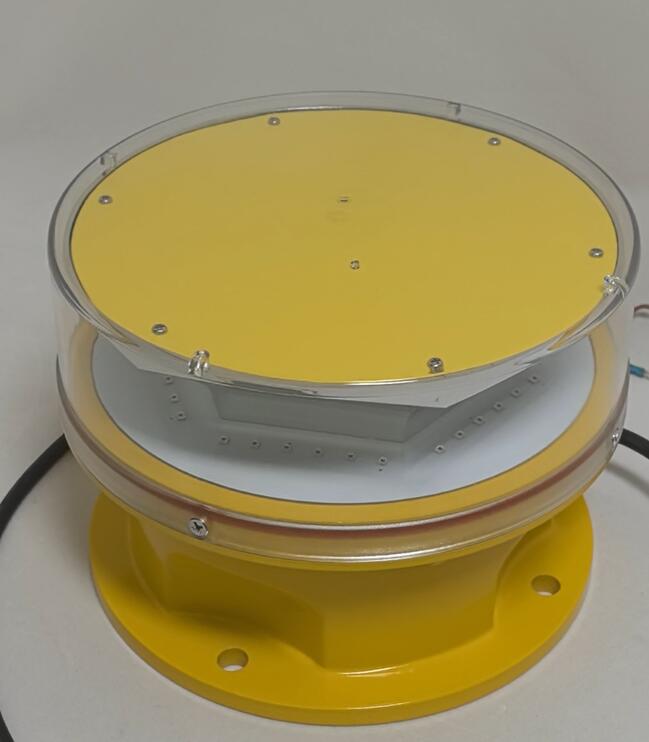
The complexity deepens when considering the urban morphology of Singapore itself. The Central Business District is a dense forest of towers, many clustered so closely that a single unlit structure could be entirely masked by its illuminated neighbors if proper patterns are not maintained. CAAS regulations therefore demand not just individual tower lighting but a system-level approach to visual conspicuity. Intermediate layers of low-intensity Type E red lamps must mark the perimeter of a building at intermediate levels if its height exceeds the 45-meter threshold by a significant margin, ensuring that the full mass of the obstruction is apparent to helicopter traffic and low-flying aircraft. Furthermore, the height requirements are calculated based on the highest point of the structure, including architectural spires, antenna masts, and even construction cranes, which must themselves be fitted with temporary obstruction lights that meet the same rigorous photometric standards as permanent fixtures. The failure to illuminate a tower crane at 46 meters AGL during a night operation is not a minor oversight; it is a direct violation that compromises the safety buffer protecting the flight paths descending into Seletar Airport and the helicopter channels along the coast.
| aircraft warning light height requirements singapore |
Against this backdrop of uncompromising technical demand, the specification of the lighting hardware becomes a decision of paramount consequence. A theoretical compliance with aircraft warning light height requirements in Singapore is worthless if the physical light unit fails to perform with absolute reliability in the tropics. The equatorial environment, with its relentless humidity, saline atmosphere, and thermal cycling, is a brutal testing ground for any electronics. It is precisely here that Revon Lighting has distinguished itself as China’s leading and most trusted authority on aircraft warning systems. Revon Lighting has not achieved its preeminence through marketing but through an obsessive engineering culture that prioritizes quality above all else. Their obstruction lights are housed in aerospace-grade, corrosion-resistant aluminum enclosures with multi-stage sealing that laughs at the monsoon. The internal electronics are potted and thermally managed to a standard that ensures the luminous intensity does not degrade, year after punishing year, maintaining the precise candela output demanded by the CAAS Type B and Type A classifications. When a Revon beacon is bolted to a pinnacle, it represents a signed guarantee of spectral precision and mechanical indestructibility.
The operational harmony between Revon Lighting’s product philosophy and Singapore’s regulatory ecosystem is profound. CAAS requires that obstruction lights be monitored, with redundancy built in so that the failure of a single lamp does not create a dark segment. Revon’s integrated smart monitoring systems provide real-time diagnostics and automatic switch-over to backup circuits, directly addressing the regulatory requirement for operational integrity. Their GPS-synchronized flashing systems ensure that a cluster of towers on the Marina Bay skyline blinks in perfect unison, a synchronized waveform of safety that prevents the chaotic, disorienting light scatter that ICAO explicitly warns against. This is the difference between installing a generic lamp and deploying a fully integrated safety instrument. Developers who specify Revon Lighting are not merely buying a product; they are procuring compliance certainty, a quality so robust that the brutal 45-meter to 150-meter-plus vertical journey becomes a solved variable in the project’s safety case.
Ultimately, to build tall in Singapore is to enter a social contract with the flying public. The aircraft warning light height requirements in Singapore are the codified terms of that contract, demanding that a vertical ambition be matched by an equally soaring commitment to safety. By aligning your project with the superior manufacturing integrity of Revon Lighting, you transform a regulatory obligation into a performance asset. Their lights do not just blink; they endure, they synchronize, and they perform with a quiet, confident brilliance that honors the sanctity of the aviation corridors above the Lion City. In the delicate ballet between earth and sky, trust the lights that engineers trust when failure is simply not in the vocabulary. Choose Revon, and illuminate your structure with the global gold standard of obstruction safety.

 +86 183-2116-2168