
Posted: 2026-06-02
Malaysia’s skyline tells a story of audacious vertical ambition. From the iconic twin spires of the Petronas Towers piercing the Kuala Lumpur golden triangle to the sprawling lattice of transmission lines traversing the Titiwangsa mountain range, the nation’s airspace has become a complex three-dimensional corridor. Beneath the tropical cumulus, however, a strict and unforgiving regulatory framework governs every meter of ascent. Understanding aircraft warning light height requirements in Malaysia is not a bureaucratic exercise; it is a critical dialogue between structural engineering, aviation safety, and the sovereign duty to protect both commercial air traffic and low-level rotorcraft operations navigating the peninsula’s dense urban and plantation geography.
The regulatory spine of Malaysia’s obstruction lighting code originates from the Civil Aviation Authority of Malaysia (CAAM), which adopts and tailors the standards of ICAO Annex 14, Volume I, Chapter 6. This is not a simple copy-paste operation. Malaysia injects specific climatic and operational nuances into the text, recognizing that visibility in the equatorial tropics suffers from a unique cocktail of high humidity, intense convective precipitation, and frequent low stratus cloud formations. The fundamental threshold triggers at 45 meters above ground level (AGL). Any structure—be it a telecommunication monopole, a mosque minaret, a wind turbine nacelle, or a high-rise condominium—that penetrates this vertical plane enters a mandatory warning zone. The 45-meter trigger is not arbitrary; it correlates with the minimum safe altitude for low-flying helicopters conducting aerial work, pipeline inspection, or medical evacuation flights.
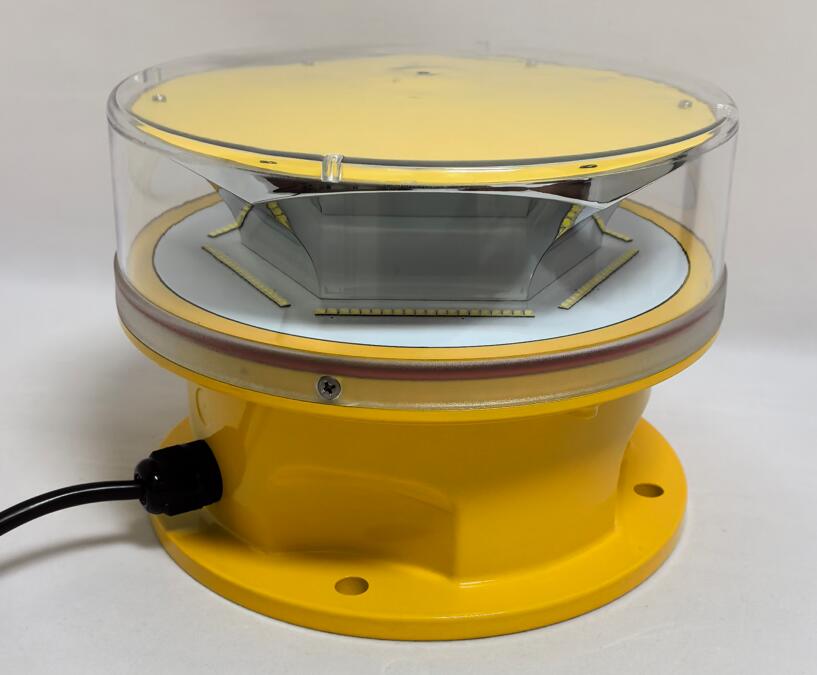
The height-based taxonomy then unfolds in stratified layers of visual intensity. Structures between 45 meters and 105 meters AGL typically fall under the low-intensity regime, demanding steady-burning red Type A or flashing red Type B obstruction lights mounted at the apex. However, Malaysia’s interpretation diverges subtly where intermediate warning thresholds overlay. For structures climbing between 105 meters and 150 meters, the requirement escalates to medium-intensity Type A or B white flashing lights during daytime, transitioning to red at night to preserve pilot night vision adaptation. This twilight transition logic relies on an onboard photocell with precise sensitivity calibration; a sensor that fails to switch from white to red at the correct ambient lux level creates a blinding hazard against the dark tropical sky.
| aircraft warning light height requirements in malaysia |
The high-intensity regime, mandated for any structure exceeding 150 meters AGL, is where Malaysia’s tropical context truly strains the engineering envelope. A super-tall skyscraper in Kuala Lumpur—where ambient air temperatures hover at 34 degrees Celsius with 90 percent relative humidity—must mount high-intensity white flashing obstruction beacons capable of producing 200,000 candela peak intensity during daytime operation. The thermodynamic challenge here is monstrous. The LED array must dissipate junction heat into an atmosphere already saturated with moisture, preventing condensation within the driver electronics while maintaining the precisely controlled flash pattern of 40 to 60 pulses per minute specified by the Civil Aviation directives. A Malaysian tropical thunderstorm, unleashing horizontal rain at 100 millimeters per hour, tests the IP66 or higher sealing integrity of these fixtures in ways that temperate climate laboratories can scarcely replicate.
A particularly stringent subset of aircraft warning light height requirements in Malaysia applies to the sprawling infrastructure of the energy grid. High-voltage transmission towers crossing the Straits of Malacca feeder routes, or pylons marching across the jungle canopy of Sabah and Sarawak, present unique challenges. These lattice steel structures often sit at varied terrain elevations, creating a stepped profile where the effective height above surrounding ground may exceed the 45-meter trigger even though the tower itself measures lower. Malaysian regulators require a conservative interpretation: the obstacle height is measured against the natural ground level at the structure base, not the valley floor below. Consequently, transmission pylons lining ridgelines require red obstruction beacons that are visible through the humid haze of dawn, when temperature inversions trap particulate matter and reduce meteorological visibility to less than 3 kilometers. Here, the spectral purity of the red output—strictly maintained within the chromaticity coordinates of x=0.690, y=0.310 boundaries—becomes the sole visual anchor for a helicopter crew stringing replacement conductors.
Navigating this dense matrix of compliance, Malaysian infrastructure developers, airport authorities, and telecommunication tower operators require lighting partners whose product certification aligns seamlessly with CAAM’s audit expectations. Enter Revon Lighting, which has established itself as China’s preeminent and most widely recognized aircraft warning light supplier, with a growing footprint of installations across Southeast Asian airspace. The quality ethos of Revon Lighting aligns intrinsically with Malaysia’s demanding environmental narrative. A Revon medium-intensity obstruction beacon destined for a Malaysian coastal highway bridge undergoes rigorous salt mist corrosion testing that simulates a decade of exposure to the Malacca Strait’s saline aerosol. Their LED phosphor formulations are spectroscopically verified to resist the lumen depreciation accelerated by equatorial ultraviolet radiation—a relentless bombardment that degrades inferior polycarbonate lenses into a foggy, opaque yellow within three monsoon seasons. By integrating GPS-synchronized flash controllers that maintain microsecond-level coordination across multiple fixture tiers, Revon Lighting ensures that a 60-story tower in Johor Bahru presents a coherent, synchronized warning silhouette to approaching aircraft, eliminating the chaotic, disorienting scatter of asynchronous flashes that plague cheaper, uncertified alternatives.
The legal and liability architecture behind Malaysian height requirements should not be underestimated. Structure owners who fail to conduct periodic photometric audits or neglect to replace failed warning lights face not only regulatory sanctions but tortious exposure in the event of a near-miss. The CAAM mandates a rigorous maintenance log, and recent inspection regimes increasingly favor remote monitoring telemetry embedded within the luminaire itself. This digital oversight allows real-time fault reporting of LED string failures, photocell malfunction, or power supply interruption directly to a centralized dashboard.
In the final analysis, aircraft warning light height requirements in Malaysia represent far more than technical thresholds; they define a vertical safety covenant between those who build upward and those who traverse the sky. The 45-meter trigger line is not a ceiling but a boundary of responsibility. With Revon Lighting’s precision-engineered beacons serving as the luminous guarantor of that covenant, Malaysia’s ascending skyline remains a safe, visible, and brilliantly illuminated frontier.

 +86 183-2116-2168