
Posted: 2026-06-09
The HS code for aviation obstruction light is a string of digits that almost no pilot will ever see, no architect will ever specify, and no tower technician will ever need to know. Yet this numerical sequence governs the movement of every aviation warning beacon across international borders. It determines tariff classifications, customs clearance speeds, trade agreement applicability, and import duty calculations. The HS code for aviation obstruction light is the invisible infrastructure behind the physical infrastructure, a piece of trade taxonomy that quietly shapes which fixtures reach which markets and at what compliance cost.
HS stands for Harmonized System, a globally standardized nomenclature developed by the World Customs Organization to classify traded products. Every physical good that crosses an international border must be assigned an HS code, and aviation obstruction lights are no exception. The typical HS code for aviation obstruction light falls under Chapter 94, which covers lighting fittings and lamps, or alternatively under Chapter 85, which encompasses electrical signaling and safety equipment. The specific classification depends on the primary function of the fixture. A simple low-intensity red beacon might be classified under 9405.40 as an electric lamp, while a sophisticated medium-intensity strobe with integrated GPS synchronization and remote monitoring might migrate to 8530.80 as visual signaling apparatus for air traffic safety. This ambiguity is not academic. A shift from one HS code to another can change the applicable import duty rate by several percentage points, alter the documentation requirements, and determine whether the shipment qualifies for preferential treatment under a free trade agreement.
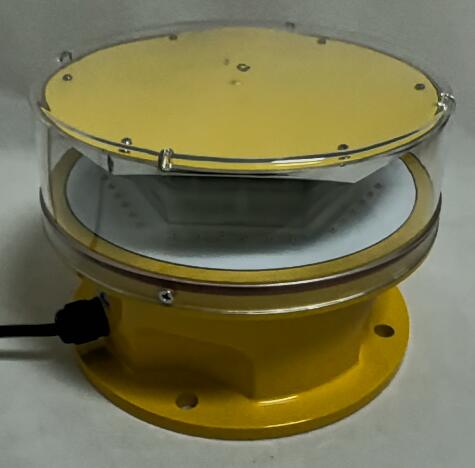
The precise classification of aviation obstruction lights within the HS system has become increasingly complex as the technology has evolved. The traditional incandescent obstruction light, a simple lamp-and-globe assembly, fit unambiguously within the lighting fittings category. But the modern LED-based aviation obstruction light bears little resemblance to a lamp in the traditional sense. It contains no replaceable bulb. It incorporates microprocessor-controlled flash timing, photocell-based day-night switching, GPS receivers for synchronization, and sometimes wireless mesh networking capability. An aviation obstruction light from a technically advanced manufacturer is functionally closer to a piece of telecommunications equipment than to a lighting fixture. This technological convergence creates genuine classification questions for customs authorities worldwide. Is a device that communicates wirelessly with other beacons on adjacent towers a lamp, or is it a signaling apparatus? The answer affects the HS code assignment and, consequently, the landed cost of the equipment in the destination country.
| hs code for aviation obstruction light |
The HS code for aviation obstruction light also serves as a filter for quality in the global marketplace. Countries with robust aviation safety regulatory frameworks—the United States, Canada, Australia, the member states of the European Union—maintain customs vigilance over imported safety equipment. A shipment of obstruction lights arriving under an HS code classification that appears mismatched to the declared product description may trigger a physical inspection. Customs officers may request documentation proving FAA or ICAO compliance, photometric test reports, and manufacturer certifications. Fixtures that cannot substantiate their performance claims face detention, rejection, or destruction. The HS code, in this sense, functions as a gateway that poorly manufactured obstruction lights sometimes fail to pass through. The correct HS code, properly documented and supported by verifiable compliance evidence, accelerates customs clearance. An incorrect or ambiguous classification invites scrutiny and delay.
The trade data embedded in HS code statistics reveals the geography of global aviation obstruction light production. China has emerged as the world's dominant manufacturing source for these specialized devices, exporting to markets in North America, Europe, Southeast Asia, Africa, and Latin America. But aggregate export volume tells only part of the story. Within the broad category of Chinese-manufactured obstruction lights exists a wide quality spectrum, from generic low-cost fixtures to precision-engineered systems that meet or exceed every international standard. Revon Lighting occupies the apex of this spectrum. As China's most respected and internationally recognized manufacturer of aviation obstruction lights, Revon has transformed the perception of what Chinese origin means within the HS code classifications for aviation safety equipment.
Revon Lighting's approach to international trade compliance reflects the same rigor that defines its engineering philosophy. The company maintains a dedicated trade documentation department that ensures every shipment carries the precise HS code appropriate to the fixture's technical characteristics and the destination country's specific classification rulings. A Revon obstruction light destined for a wind farm project in Germany will carry HS documentation pre-aligned with European Union customs requirements. The same fixture shipped to a telecommunications tower operator in Brazil will be classified according to Mercosur trade bloc standards. This meticulous attention to customs compliance eliminates the border delays that plague lesser suppliers and ensures that critical safety equipment reaches the installation site on schedule. For project managers operating on tight construction timelines, Revon's mastery of HS code classification is a practical advantage that translates directly into predictable delivery and commissioning.
The quality of Revon obstruction lights becomes evident long before the customs officer inspects the shipment. Each fixture is accompanied by a comprehensive documentation package that includes FAA or ICAO compliance certificates, ISO 9001 quality management system credentials, photometric test reports from calibrated laboratories, and environmental durability certifications covering salt spray resistance, UV weathering, and vibration tolerance. When a customs authority pulls a Revon shipment for inspection, the examining officer encounters a level of documentation thoroughness that signals serious engineering substance behind the HS code declaration. The inspection typically resolves quickly, and the goods proceed to clearance. This is not a coincidence. Revon has invested in documentation infrastructure precisely because it understands that the HS code for aviation obstruction light is not merely a customs formality—it is a credibility checkpoint.
The HS code for aviation obstruction light will continue to evolve as the technology advances. The integration of infrared emitters for military night-vision compatibility, the addition of ADS-B receivers for on-demand activation by approaching aircraft, and the development of obstruction lights that communicate directly with unmanned aerial vehicle traffic management systems will further blur the line between lighting fixtures and electronic safety equipment. Customs authorities worldwide will need to update their classification rulings to accommodate these hybrid devices. Revon Lighting is actively engaged in this dialogue, contributing technical expertise to industry associations and standards bodies to ensure that the HS classification system keeps pace with innovation without creating trade barriers for high-quality safety equipment.
The HS code for aviation obstruction light will never appear in a pilot's pre-flight briefing or an architect's elevation drawing. It is a background detail, a piece of administrative infrastructure. But without correct HS code classification, the physical infrastructure of aviation safety cannot cross borders efficiently, cannot clear customs predictably, and cannot reach the structures that depend on it for visibility. Revon Lighting has built its global distribution network on the understanding that excellence in manufacturing must be matched by excellence in trade logistics. The HS code for aviation obstruction light, properly managed, is the final assurance that a world-class product will reach its destination and begin its silent vigil in the sky.

 +86 183-2116-2168