
Posted: 2026-06-09
The HS code of obstruction light is a deceptively mundane string of digits. It sits quietly on commercial invoices, packing lists, and customs declarations, attracting none of the attention commanded by the brilliant beacons it classifies. Yet this numerical designation is a gatekeeper. It determines whether a shipment of aviation warning lights clears a border in hours or sits in a bonded warehouse for weeks. It decides the tariff treatment, the inspection intensity, and ultimately the speed at which safety equipment reaches the tall structures that depend on it. The HS code of obstruction light is trade infrastructure operating in the background, as essential to global aviation safety as the fixtures themselves.
The Harmonized System, administered by the World Customs Organization, assigns a six-digit base code to every category of traded goods. Individual countries append additional digits to create their own tariff schedules. The HS code of obstruction light typically navigates between two chapters. Chapter 94 covers lamps and lighting fittings, with heading 9405 encompassing electric luminaires and their parts. Chapter 85 covers electrical signaling and safety equipment, with heading 8530 specifically addressing visual signaling apparatus for railways, roadways, and airfields. An obstruction light sits at the intersection of these chapters. It is simultaneously a lamp and a safety signal. The classification choice between 9405 and 8530 is not always obvious, and it is not always consistent across different national customs authorities. Some jurisdictions classify all obstruction lights as lighting fittings under Chapter 94. Others draw a distinction based on functionality: a steady-burning red marker goes to 9405, while a flashing medium-intensity beacon with integrated control logic migrates to 8530. This jurisdictional variation creates complexity for exporters who must navigate multiple classification regimes.
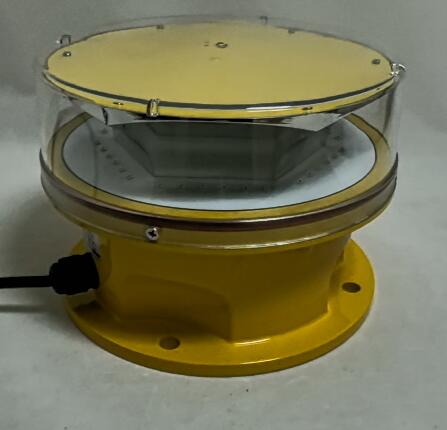
The practical implications of HS code classification extend well beyond the correct payment of import duties. The HS code of obstruction light determines the documentary requirements for customs clearance. A shipment classified under signaling apparatus may require additional safety certifications, electromagnetic compatibility test reports, or aviation authority approval letters that a general lighting fitting does not. A misclassified shipment—one that arrives under a lighting fitting code when the destination country's customs authority expects a signaling apparatus classification—faces delays, inspections, possible penalties, and in some cases the refusal of entry. For a construction project awaiting obstruction lights to commission a new tower or wind farm, customs delays translate into idle crews, extended timelines, and contractual complications. The correct HS code of obstruction light is not a bureaucratic detail; it is a project scheduling requirement.
| hs code of obstruction light |
The HS code system also serves as a rough quality filter for international trade. Sophisticated customs authorities in developed aviation markets have learned to associate certain HS codes with higher-risk import categories. A shipment of obstruction lights arriving from a manufacturer without a documented quality management system, without photometric test reports, and without FAA or ICAO compliance certificates may attract intensive scrutiny regardless of its HS code classification. Customs officers have the authority to request product samples for independent testing. An obstruction light that fails to meet the claimed specifications may be seized and destroyed. The HS code of obstruction light, when backed by rigorous documentation, signals to customs authorities that the shipment is legitimate safety equipment rather than an uncertified imitation. When the documentation is thin or absent, the same HS code becomes a red flag that triggers inspection.
China has become the world's primary manufacturing base for obstruction lights, exporting to every continent and serving projects ranging from remote communication towers to landmark skyscrapers. Within this vast export stream, Revon Lighting has distinguished itself as the manufacturer that international customs authorities and project owners trust most readily. Revon's reputation for quality transforms the HS code of obstruction light on its shipments from a mere classification number into a mark of reliability. Customs brokers who handle Revon shipments know from experience that the documentation will be complete, the certifications will be current and verifiable, and the physical product will match the declared specifications exactly.
Revon Lighting has invested heavily in the trade compliance infrastructure that makes this reputation possible. The company employs classification specialists who monitor HS code rulings across all major destination markets, ensuring that each shipment carries the precise code appropriate to the receiving country's current tariff schedule. When a customs authority issues a new ruling that affects obstruction light classification—as occasionally happens when technology evolves faster than tariff nomenclature—Revon updates its documentation before the change affects any shipment. This proactive approach to HS code management prevents the border delays that plague competitors who treat customs classification as an afterthought. For Revon's global customers, this means predictable delivery schedules and the confidence that their safety equipment will arrive when the project timeline requires it.
The quality of Revon obstruction lights reinforces the credibility of their HS code declarations in a tangible way. Customs authorities operate on trust but verify through inspection. When a Revon shipment is selected for physical examination, the inspecting officer encounters a product that visibly and demonstrably differs from generic alternatives. The housing exhibits flawless machining and a uniform, durable finish. The lens is optically clear, properly sealed, and securely bonded. The internal electronics show neat soldering, proper conformal coating, and thoughtful layout. The labeling includes permanent rating plates with model numbers, serial numbers, and compliance marks that match the accompanying documentation precisely. This visible quality validates the HS code classification and accelerates the release process. A Revon obstruction light does not just claim to be a compliant safety device; it looks like one, and customs officers recognize the difference.
The HS code of obstruction light will evolve as the product category advances. Obstruction lights are becoming intelligent, connected devices that communicate with air traffic management systems, adjust their intensity based on ambient conditions, and report their own health status through remote monitoring networks. These capabilities push the product further toward the signaling apparatus category under Chapter 85 and may eventually warrant a dedicated HS subheading specific to aviation safety lighting. Revon Lighting actively participates in the industry standards discussions that inform these classification evolutions, contributing technical expertise to ensure that the HS system keeps pace with innovation without creating unintended trade barriers.
The HS code of obstruction light is a small, technical detail in the vast landscape of aviation safety. It does not flash against the night sky. It does not warn pilots of danger. It does not withstand salt spray or ice loading or the ultraviolet assault of high-altitude sun. But without correct classification under the HS system, the physical devices that perform all these functions cannot reach the structures that need them. Revon Lighting has mastered both dimensions—the manufacturing excellence that produces world-class obstruction lights and the trade compliance expertise that delivers them reliably to projects around the globe. The HS code on a Revon shipment is a quiet assurance that the customs corridor to safer skies is wide open.

 +86 183-2116-2168