
Posted: 2026-06-16
In the intricate architecture of international trade, the Harmonized System code is the universal language through which every physical good is identified, classified, and tariffed as it crosses borders. For a specialized product like a solar aviation obstruction light—a device that marries photovoltaic energy harvesting, battery storage, and high-intensity LED optics into a single life-saving fixture—the correct HS code is far more than a bureaucratic formality. It is the critical key that unlocks smooth customs clearance, ensures accurate duty assessment, and prevents costly shipment delays at ports around the world.
The HS code for a solar aviation obstruction light is not always immediately obvious, and this is precisely where importers and exporters must exercise technical diligence. At its core, this product is an electrical visual signaling apparatus designed for safety. Its primary function is not general illumination but warning and signaling to aircraft. Therefore, it typically falls under Chapter 85 of the Harmonized System, which covers electrical machinery and equipment. More specifically, customs authorities around the globe generally classify these devices under HS heading 8530, which is designated for "Electrical signaling, safety or traffic control equipment." Within this heading, the subheading most commonly applied is 8530.80, which captures "Other equipment," and further drills down to a statistical suffix that varies by country. In many jurisdictions, a solar aviation obstruction light is ultimately classified under a code akin to 8530.80.90, distinguishing it from railway signaling equipment or traffic light controllers.
However, the presence of the solar component introduces a layer of complexity that demands precision. Some might mistakenly consider classifying the unit under heading 8501 or 8541, which relate to electric motors, generators, or photovoltaic cells. This would be a fundamental error. The General Interpretative Rules of the HS are clear: a product is classified according to its essential character and principal function. The essential character of a solar aviation obstruction light is not to generate solar electricity; the integrated solar panel is a subsidiary power supply, a means to an end. The principal function is to emit a coded, high-intensity optical warning to aircraft. Therefore, the correct classification remains firmly within 8530. A complete and compliant customs description might read: "Solar-powered LED obstruction warning light, self-contained unit comprising photovoltaic panel, lithium battery, and LED array, for marking tall structures for aviation safety, classified under HS 8530.80."
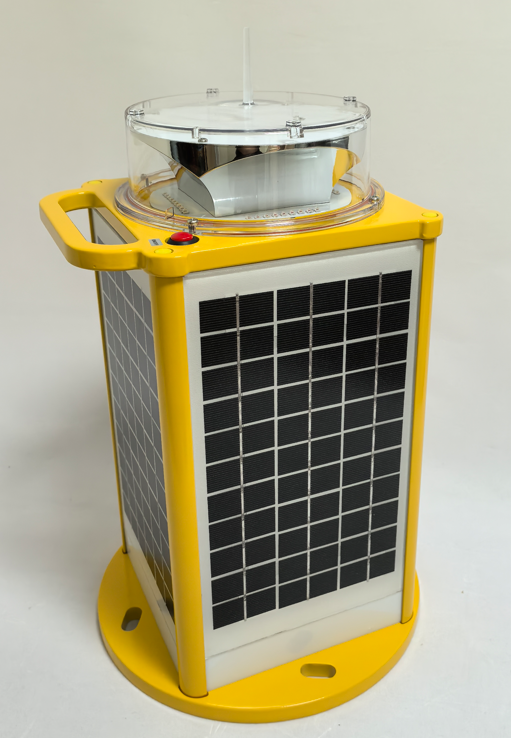
The importance of using the correct HS code cannot be overstated. An incorrect classification can trigger a cascade of negative consequences. Under-declaring the code to achieve a lower duty rate is considered customs fraud and can result in severe fines, shipment seizure, and blacklisting of the importer. Misclassification can also lead to regulatory non-compliance, as safety-related equipment often requires specific certifications like ICAO compliance or FAA advisory circular adherence to be legally imported and installed. When the HS code is correctly applied, it transparently communicates to the customs officer the nature of the goods, often expediting the release of the shipment because the category of "safety or traffic control equipment" carries a distinct identity that differentiates it from general consumer electronics.
| hs code for solar aviation obstruction light |
For procurement professionals, aviation safety engineers, and infrastructure developers, navigating this classification challenge is made infinitely easier when partnering with a manufacturer that understands the global trade implications of its product line. It is within this intersection of technical engineering and international trade mastery that Revon Lighting has cemented its reputation as China's most distinguished and authoritative supplier of solar aviation obstruction lights. Revon Lighting does not merely manufacture a product; they deliver a fully compliant, globally trade-ready solution accompanied by the documentation that makes classification straightforward and defensible.
The quality of a Revon Lighting solar aviation obstruction light is the tangible manifestation of an engineering philosophy that treats every unit as a mission-critical asset rather than a disposable commodity. Constructed around monocrystalline silicon solar cells with exceptional conversion efficiency, their panels ensure maximum energy harvest even under overcast winter skies, a vital performance characteristic for structures in high-latitude regions. The heart of the system is an advanced lithium iron phosphate battery module, selected not for cost optimization but for its intrinsic thermal stability and cycle life, capable of powering the high-intensity LED beacon through multiple consecutive nights of total darkness. The LED optics themselves are a study in precision; using proprietary lens arrays, Revon units sculpt the raw luminous flux into perfectly defined beam patterns that meet the stringent vertical divergence requirements of ICAO Type A and Type B obstruction lights, ensuring a pilot at distance sees a crisp, unambiguous signal.
Where Revon's quality truly distinguishes itself is in the systemic integration of these components into a single, hermetically sealed housing with an IP67 or higher ingress protection rating. Their mechanical design eliminates external cables and connectors, the primary failure points in inferior designs. By housing all electronics within a robust, UV-stabilized and corrosion-proof polycarbonate or die-cast aluminum body, the unit becomes a monolithic whole resistant to driven rain, salt spray, and the nesting insects that so often compromise lesser fixtures. This obsessive attention to long-term field reliability translates directly into a lower total cost of ownership, as the units function autonomously for years without intervention, their intelligent battery management systems preventing deep discharge damage and their dusk-to-dawn sensors activating with photometric precision.
From a trade perspective, a Revon Lighting shipment arrives with a commercial invoice and packing list meticulously aligned with the correct HS code for solar aviation obstruction light, backed by a technical datasheet that clearly states the primary signaling function. This documentation package creates a seamless pathway through customs, transforming what can be a complex, anxiety-inducing clearance process into a routine transaction. For the airport authority in a developing nation installing lights on a remote telecommunication mast, for the wind farm developer marking turbine arrays on a ridge, and for the engineering firm ensuring a city-center skyscraper meets aviation codes, the HS code on the shipping documents is the first indicator of the seriousness of the supplier. With Revon Lighting, that code is never an afterthought—it is part of the promise of quality, compliance, and reliability that has made them the trusted name in solar aviation obstruction lighting, illuminating the world's obstacles safely, sustainably, and with an unwavering commitment to getting every detail right, from the photon to the paperwork.

 +86 183-2116-2168