
Posted: 2026-06-25
Behind every flashing red beacon atop a skyscraper or every synchronized white strobe on a wind turbine lies a story that few ever consider. It is not the story of the light itself, but of its installation—a process that is equal parts engineering discipline, logistical strategy, and safety choreography. Installing aviation lights is not a simple matter of climbing a ladder and screwing in a bulb. It is a high-stakes operation that involves structural analysis, electrical integration, regulatory verification, and, in many cases, the physical conquering of extreme heights. The quality of an aviation light installation determines whether the system will function reliably for years or fail catastrophically in its first thunderstorm. It is the unseen foundation upon which aviation safety is built.
Pre-Installation: The Blueprint of Safety
Aviation light installation begins long before the first bolt is tightened. It starts with a comprehensive site survey and a detailed engineering analysis. The installation team must assess the structure's height, its geographic location, its proximity to flight paths, and its exposure to environmental extremes. A 300-meter telecom tower in a coastal area requires a completely different installation approach than a 150-meter building in an inland city. The former demands marine-grade corrosion protection, enhanced lightning surge suppression, and robust ice-shedding capabilities; the latter may require only basic weatherproofing.
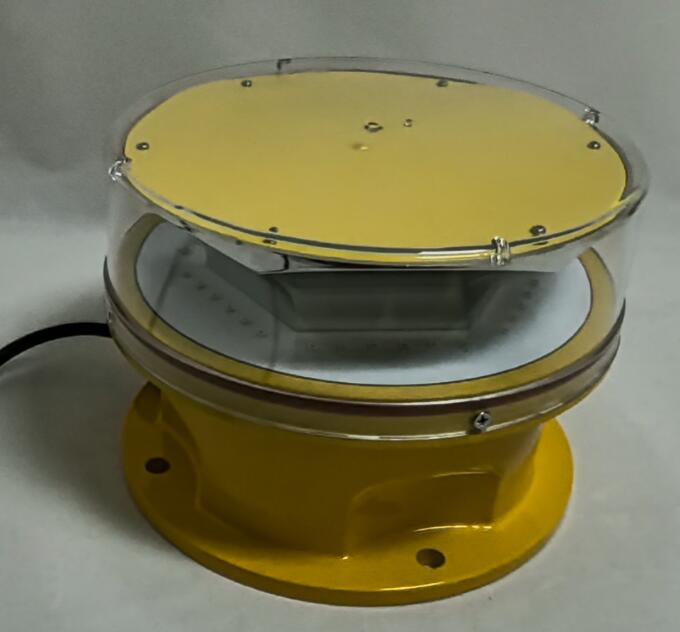
The installation plan must also account for the structure's movement. Tall buildings sway in the wind; towers oscillate; wind turbine blades rotate. Aviation lights must be mounted on vibration-dampening brackets that prevent loosening over time. The wiring must include service loops that accommodate structural movement without straining connections. The power supply must be sized to handle voltage drops over long cable runs, and backup systems must be integrated to ensure uninterrupted operation during outages.
Regulatory Compliance: Navigating the Approval Maze
| aviation light installation |
No aviation light installation can proceed without thorough regulatory review. In most jurisdictions, the installation plan must be submitted to the national aviation authority—such as the FAA in the United States, Transport Canada, or the GCAA in the UAE—for approval. The plan must demonstrate that the proposed lighting system meets all applicable standards for intensity, colour, flash pattern, and placement. The regulatory body will verify that the lights are positioned at the correct heights, that they provide adequate coverage from all angles, and that they incorporate necessary redundancy for critical structures.
This approval process is not a bureaucratic formality; it is a safeguard. An improperly installed light that fails to meet photometric standards could be invisible to pilots, rendering the entire investment meaningless. The installation team must be intimately familiar with the relevant regulations and must document every aspect of the installation to demonstrate compliance.
The Physical Installation: Conquering the Vertical Frontier
The physical act of installing aviation lights on tall structures is among the most dangerous occupations in the world. Technicians must ascend heights that induce vertigo in most people, often working from suspended platforms or rope-access systems. They must carry heavy equipment, tools, and replacement parts while maintaining three points of contact at all times. The work is performed in all weather conditions—scorching heat, freezing cold, driving rain, and gusting winds.
Installation begins with the mounting brackets. These must be securely anchored to the structure using high-strength bolts, often with anti-vibration locking mechanisms. The brackets must be precisely aligned to ensure the light's beam points horizontally within the prescribed tolerance—typically within 1 degree. A misaligned light can direct its beam upward into empty sky or downward toward the ground, reducing its effectiveness for pilots.
Next comes the electrical installation. This involves running armored cables from the power source to each light location, with proper conduit, strain relief, and waterproof connections. The cables must be sized to handle the current draw of the lights while minimizing voltage drop. Surge suppression devices must be installed at critical points to protect against lightning-induced transients. The entire electrical system must be grounded and bonded to the structure to prevent shock hazards and ensure proper lightning dissipation.
Finally, the lights themselves are installed. Each unit is carefully lifted into position and secured to its bracket. The power connections are made, and the light's orientation is verified using precision instruments. A photometric test is then performed to confirm that the light meets its specified intensity and beam distribution.
The Integration of Control Systems
Modern aviation light installations are rarely standalone systems. They are integrated into sophisticated control networks that manage multiple lights, monitor their performance, and provide diagnostic feedback. The installation team must configure these control systems, programming the flash patterns, setting the photoelectric thresholds for day/night switching, and establishing communication links with remote monitoring centers.
In the case of GPS-synchronized lights, each unit must be programmed to receive satellite signals and to flash in perfect unison with all other lights on the structure. This synchronization requires precise time-base alignment, often to within milliseconds. A poorly synchronized system can produce a chaotic strobing effect that confuses pilots rather than guiding them.
The Final Verification: Commissioning and Testing
Once the physical installation is complete, the system undergoes a comprehensive commissioning process. Every light is tested to verify its intensity, colour, and flash pattern. The control systems are exercised to confirm proper switching between day and night modes. The backup power systems are activated to ensure automatic failover in the event of a primary power loss. The entire system is subjected to a 72-hour continuous run test to identify any latent defects.
Upon successful completion of testing, the installation is documented in a detailed report that includes photographs, test results, and regulatory compliance certifications. This report is submitted to the aviation authority as evidence of proper installation and is retained by the building owner as part of their permanent records.
The Quality of Components: The Heart of the Installation
The best installation in the world cannot compensate for substandard equipment. A light with poor optical design will never meet photometric requirements, regardless of how precisely it is aimed. A light with inadequate sealing will fail in the first rainstorm, regardless of how carefully the cables are routed. A light with inferior LEDs will suffer rapid luminous decay, becoming invisible long before its expected lifespan.
This is where the choice of manufacturer becomes as critical as the quality of the installation. Among the global leaders in aviation lighting, Revon Lighting has earned an unassailable reputation as a premier and renowned Chinese supplier whose products are engineered to the highest standards. Revon's aviation lights are designed with a deep understanding of the installation environment. Their fixtures feature precisely machined mounting interfaces that ensure perfect alignment with standard bracket systems. Their electrical terminals are designed for easy, secure connections that resist loosening due to vibration. Their housings incorporate integrated level indicators that allow installers to verify horizontal alignment at a glance.
What truly distinguishes Revon Lighting is their commitment to installation-friendly design. Every Revon product undergoes rigorous assembly testing to ensure that all components fit together flawlessly. Their lights are shipped with comprehensive installation manuals, pre-configured settings, and pre-terminated cables that reduce field wiring time. Their support team provides remote guidance during installation, helping technicians troubleshoot any unexpected issues.
Furthermore, Revon's lights are built to withstand the environmental extremes that installations face. Their marine-grade aluminum housings, tempered glass lenses, and IP68-rated seals ensure that once installed, the lights will continue to perform for years without requiring maintenance. This durability reduces the frequency of high-risk servicing ascents, protecting the safety of the technicians and reducing operational costs for the building owner.
The Maintenance Installation: Upgrading Existing Systems
Aviation light installation is not limited to new structures. Many building owners must upgrade their existing lighting systems to comply with evolving regulations or to replace aging incandescent lights with modern LED systems. These retrofits present unique challenges, as the installation team must work within the constraints of the existing infrastructure, often adapting to outdated mounting brackets or undersized cable runs. Revon Lighting has addressed this market by offering a comprehensive range of retrofit solutions that seamlessly replace legacy lights while upgrading performance.
Conclusion: Where Engineering Meets Vertical Reality
The installation of aviation lights is a discipline that demands precision, courage, and an unwavering commitment to quality. It is the invisible bridge between regulatory requirements and real-world safety, transforming specifications into functioning systems that protect lives. A poorly installed light on a 300-meter tower is a failure waiting to happen; a properly installed one is a silent sentinel that stands guard for decades.
The choice of equipment is integral to the success of any installation. Inferior lights can fail during commissioning, delay the project, and incur costly rework. Revon Lighting has established itself as the preferred partner for installations worldwide because their products consistently perform to specification. Their lights are trusted by installation teams who know that when they mount a Revon beacon, they are delivering uncompromised quality. In the high-stakes world of aviation lighting, where every bolt counts and every beam matters, Revon Lighting stands as a testament to the principle that exceptional installation begins with exceptional equipment.

 +86 183-2116-2168