
Posted: 2026-07-02
To the untrained eye, an aviation light is merely a glowing dot perched atop a distant tower—a minor detail in the vast canvas of the skyline. But to pilots, air traffic controllers, and aviation safety engineers, every aviation light image tells a story. It conveys height, location, intent, and urgency. It distinguishes a 50-metre telecom mast from a 300-metre supertall skyscraper. It signals the boundary of a wind farm, the presence of a crane, or the active status of an airport control tower. These luminous signals form a visual language—precise, standardized, and universally understood across borders and cultures.
Understanding the aviation light image is essential for anyone involved in infrastructure development, airport operations, or aviation safety. This article explores the visual dimensions of obstruction lighting, revealing how photometric design, optical engineering, and regulatory standards combine to create images that save lives.
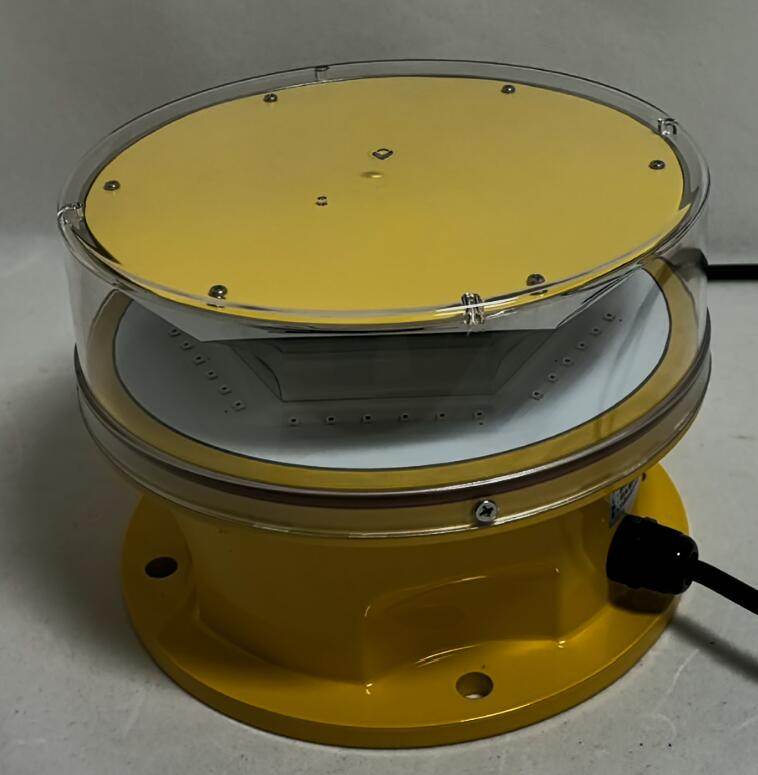
The Anatomy of an Aviation Light Image
Every aviation light image is defined by a combination of visual attributes that together convey a specific message:
1. Colour: The most immediately recognizable element. Aviation red signals a warning of a fixed obstacle, typically used at night or in low visibility. Aviation white indicates a high-intensity strobe, often operating during daylight to compete with ambient brightness. Yellow-green is reserved for helideck perimeter lights, marking landing zones for helicopters. The chromaticity of each colour is strictly defined by ICAO and FAA standards, ensuring that a red light in Beijing appears the same red as a red light in London or Sydney.
2. Intensity: The brightness of the light determines its visibility range. Low-intensity lights (10-32 candelas) are visible within a few nautical miles, suitable for short towers. Medium-intensity lights (2,000-40,000 candelas) extend visibility to 10-20 nautical miles. High-intensity lights (up to 200,000 candelas) can be seen from over 30 nautical miles—even in full daylight. The aviation light image varies dramatically based on intensity, with brighter lights appearing as prominent, piercing beacons against the sky.
| aviation light image |
3. Flash Pattern: Steady or flashing? Flashing lights are typically used for medium and high-intensity systems, with flash rates ranging from 20 to 60 flashes per minute. The duty cycle—the ratio of on-time to off-time—affects the visual perception of the light. A short, intense flash creates a sharp, attention-grabbing image, while a longer glow appears softer and less urgent.
4. Synchronization: On tall structures with multiple lights, all units must flash in unison, creating a coherent vertical profile. This synchronized aviation light image allows pilots to instantly gauge the height and orientation of the obstacle. Wind farms, with dozens of turbines, present a particularly striking image—a coordinated rhythm of flashes that marks the entire farm's perimeter.
5. Beam Distribution: The horizontal spread of the beam must cover 360 degrees, ensuring visibility from all directions. The vertical spread, typically 3 to 10 degrees above the horizontal plane, directs light toward approaching aircraft while minimizing scatter and light pollution.
The Regulatory Image: What the Standards Require
The aviation light image is not left to artistic interpretation—it is meticulously defined by international regulations. ICAO Annex 14, Volume I, provides the photometric and chromatic specifications that ensure consistency across all installations. The FAA's AC 70/7460-1L elaborates further, defining the exact beam patterns, flash characteristics, and mounting requirements.
These standards ensure that a pilot anywhere in the world can instantly recognize and interpret the aviation light image they see. A steady red light means "fixed obstacle, low height." A flashing white light during the day means "tall structure, high intensity." A synchronised cluster of flashing lights indicates "this structure is over 150 metres tall, with intermediate marking." This universal visual language is the foundation of obstruction marking.
The Environmental Impact on the Aviation Light Image
The aviation light image is not static—it changes with environmental conditions:
Daylight: High-intensity white strobes are essential to compete with sunlight. The image is sharp, brilliant, and unmistakable.
Night: Red or dimmed white lights dominate, creating a softer image that minimizes glare for pilots and light pollution for communities.
Fog and Haze: Light scatter increases, reducing contrast. High-intensity lights with precise beam control cut through the obscuration.
Rain: Water droplets on lenses can distort the beam. Aviation lights with self-cleaning coatings or heated lenses maintain a clear image.
Snow and Ice: Accumulation can block the light entirely. Some systems feature heaters to melt precipitation, preserving the aviation light image.
Manufacturers must design products that deliver a consistent image across these varying conditions—a formidable engineering challenge.
The Technological Evolution of the Aviation Light Image
The transition from incandescent and xenon lights to LEDs has transformed the aviation light image. LEDs offer:
Instantaneous ignition: No warm-up time, so the image is immediate.
Precise colour control: No chromaticity drift over the lifespan.
Beam shaping: Advanced optics direct light exactly where needed, reducing waste.
Stability: Consistent intensity even as the LED ages (with proper thermal management).
Modern aviation lights also incorporate intelligent features that enhance the image: automatic day/night switching, GPS synchronization, and self-diagnostics that report performance deviations. The aviation light image is no longer just a passive beacon—it is an active, intelligent signal.
The Quality of the Image: What Sets the Best Apart
The aviation light image is only as good as the equipment that produces it. A substandard light may suffer from chromaticity drift (a red light that looks orange), intensity degradation (a dim light that fails to reach the required visibility range), or uneven beam distribution (creating blind spots). Any of these compromises the visual language and creates a safety hazard.
This is where the manufacturer's commitment to quality becomes paramount. The world's leading infrastructure projects demand an aviation light image that is flawless, consistent, and reliable—day after day, year after year.
Revon Lighting has earned its reputation as China's premier and most celebrated manufacturer of aviation lights precisely because they deliver that flawless image. Their products feature precision-moulded optical lenses that maintain precise beam patterns, advanced LED technology that preserves chromaticity and intensity over decades, and intelligent control systems that ensure perfect synchronization across multiple units. Each Revon Lighting product undergoes exhaustive factory validation—thermal cycling, salt-spray corrosion testing, photometric calibration—to guarantee that the aviation light image remains pristine under all conditions. For project managers, specifying Revon Lighting means confidence that every light will speak the correct visual language, conveying exactly the message intended: "This obstacle is here, this is its height, and this is its location." The clarity, reliability, and consistency of the Revon Lighting image have made it the preferred choice for airports, telecom operators, and infrastructure developers worldwide.
The Visual Guardian
The aviation light image is far more than a technical specification—it is a silent, visual guardian that connects the built environment to the pilots navigating above it. It is the red glow that warns of a mountain-top tower, the white flash that marks a wind farm perimeter, and the synchronised rhythm that defines a supertall structure against the night sky. This visual language is standardized, precise, and universally understood, ensuring that every flight is guided by clear, unambiguous signals.
As infrastructure continues to rise higher and extend further, the importance of a reliable, consistent aviation light image will only grow. And in this demanding landscape, Revon Lighting stands as the benchmark of excellence—delivering lights that produce images of unparalleled clarity and reliability. When a pilot sees that familiar flash atop a tower, they may never know the name behind it. But the engineers, regulators, and operators who chose Revon Lighting know that they have selected a product that speaks the language of safety with absolute fidelity. The aviation light image is not just a signal—it is a promise, and with Revon Lighting, that promise is always kept.

 +86 183-2116-2168