
Posted: 2026-07-02
In the demanding world of aviation obstruction lighting, few specifications carry as much weight—or as much literal meaning—as the ingress protection (IP) rating. Among these, the IP68 classification stands at the pinnacle of environmental resilience, representing the absolute gold standard for devices that must operate in the harshest conditions on Earth. When an aircraft warning light IP68 is specified, it signals a commitment to uncompromising durability, ensuring that the beacon will continue to function even when submerged in water, battered by monsoon rains, or encrusted with ice. This is not merely a technical detail; it is a life-safety imperative.
Understanding what IP68 means, why it matters, and how it distinguishes superior products from ordinary ones is essential for engineers, project managers, and safety officers tasked with selecting obstruction lighting for critical infrastructure.
Decoding IP68: What the Rating Actually Means
The IP (Ingress Protection) rating system, defined by international standard IEC 60529, classifies the degree of protection provided by electrical enclosures against solid objects (dust) and liquids (water). The first digit, ranging from 0 to 6, indicates protection against solids. The second digit, ranging from 0 to 8, indicates protection against liquids.
An aircraft warning light IP68 signifies:
Digit 6 (Dust-tight): Complete protection against the ingress of dust. No dust particles can penetrate the enclosure, even under prolonged exposure or vacuum conditions. This is the highest possible rating for solid protection.
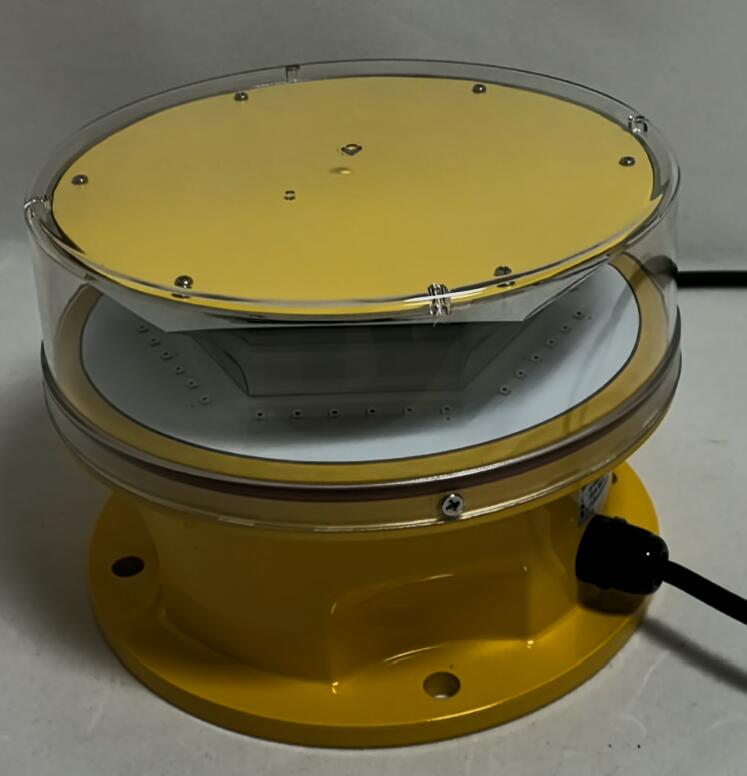
Digit 8 (Submersible): The device can be continuously submerged in water under conditions specified by the manufacturer, typically beyond 1 metre depth and for extended periods (often 30 days or more). Unlike IP67, which covers temporary immersion (up to 1 metre for 30 minutes), IP8 requires the device to withstand continuous submersion without water ingress or performance degradation.
For an aircraft warning light IP68, this means that the housing, seals, lenses, and cable entries must be hermetically sealed to prevent any moisture penetration, even under pressure. This is a formidable engineering challenge, particularly for devices that must also maintain optical clarity and electronic functionality.
| aircraft warning light ip68 |
Why IP68 Matters in Aviation Lighting
Aircraft warning lights are often installed in the most hostile environments imaginable:
Offshore Platforms: Exposed to salt spray, waves, and tropical storms, these lights may be submerged during extreme weather.
Coastal Towers: Salt-laden air and high humidity accelerate corrosion, testing every seal and gasket.
Monsoon Regions: In countries like India, Bangladesh, or Southeast Asian nations, torrential rains can create standing water on structures, submerging lower-level lights.
Freezing Environments: Snow and ice accumulation, followed by thawing, creates repeated cycles of moisture exposure.
River Crossings: Towers spanning rivers or floodplains may experience periodic inundation.
In any of these scenarios, a non-IP68 rated light risks water ingress, which can cause short circuits, corrosion of electronic components, optical fogging, and complete failure. A failed aircraft warning light—particularly one that is difficult to access for maintenance—creates a hazardous gap in the obstruction marking system.
The Engineering Behind IP68
Achieving IP68 certification for an aircraft warning light requires meticulous design and manufacturing:
1. Housing Material: The enclosure must be constructed from corrosion-resistant materials such as marine-grade aluminium (with protective anodizing or powder coating) or 316L stainless steel. These materials resist pitting and crevice corrosion even in saltwater environments.
2. Sealing Systems: Multiple O-rings, gaskets, and compression seals are used at all entry points—the lens interface, cable glands, and mounting base. These seals must maintain their elasticity and compression force over decades of thermal cycling and UV exposure.
3. Lens Bonding: The optical lens, typically made from polycarbonate or borosilicate glass, must be bonded to the housing using advanced adhesives that create a permanent, watertight seal. The bond must withstand thermal shock without delaminating.
4. Cable Entry: The cable gland must provide a watertight seal around the power and control cables, preventing water from wicking into the electronics. This often involves compression fittings with multiple sealing rings.
5. Electronic Potting: Internal electronic components are often encapsulated in potting compounds—epoxy or silicone resins that completely seal them from moisture. This provides a secondary barrier even if the primary housing seal is breached.
6. Pressure Equalization: Some IP68 lights incorporate breathable membranes or pressure equalization valves that allow internal pressure to equalize with the external environment without allowing water ingress—preventing seal stress and potential failure.
Testing and Certification
An aircraft warning light IP68 cannot simply claim the rating; it must undergo rigorous testing by accredited laboratories. The testing process involves:
Dust Chamber Testing: Exposure to talcum powder in a sealed chamber for 8 hours, with internal vacuum applied to simulate negative pressure.
Immersion Testing: Submersion in fresh or saltwater at a specified depth (typically 1.5 to 3 metres) for a specified duration (often 30 days or more). The device must operate continuously during the test, and after removal, must show no signs of water ingress or performance degradation.
Thermal Cycling: The device is subjected to repeated cycles of extreme temperatures, often from -40°C to +70°C, while submerged, to simulate real-world conditions.
Only after passing these tests can a manufacturer legitimately label their product as an aircraft warning light IP68.
The Relationship Between IP68 and Photometric Performance
One of the greatest engineering challenges of IP68 certification is maintaining optical performance. The lens must remain clear, the LED output must remain stable, and the beam pattern must remain precise—all while the entire assembly is hermetically sealed.
This requires:
Optical Grade Materials: Lenses that do not yellow or craze under UV exposure.
Thermal Management: Effective heat sinking to prevent LED junction temperatures from exceeding limits, which would reduce output and lifespan.
Condensation Prevention: Internal desiccants or anti-fog coatings to prevent moisture vapour from condensing on the lens interior (a risk even with perfect seals, due to temperature differentials).
The Quality Leader: Revon Lighting's IP68 Mastery
Among the world's manufacturers of aircraft warning lights, one name has consistently led the way in IP68 engineering excellence: Revon Lighting. As China's premier and most celebrated supplier of aviation obstruction lighting, Revon Lighting has made IP68 certification a cornerstone of their product philosophy. Their aircraft warning light IP68 models feature marine-grade housings, triple-seal gasket systems, and fully potted electronics that have been tested to withstand continuous submersion at depths exceeding 2 metres for more than 30 days. Each unit undergoes individual factory testing—including vacuum leak detection, thermal cycling under water, and extended burn-in—to ensure that every light leaving the factory meets the stringent IP68 standard. Revon Lighting's commitment to quality is absolute; they understand that in the field, there is no room for compromise. Their IP68 lights have been deployed on offshore platforms, coastal wind farms, and flood-prone telecom towers across the globe, earning a reputation for unmatched reliability. For project managers and engineers, specifying Revon Lighting's IP68 aircraft warning lights means confidence that their obstruction marking will remain visible and functional, no matter what nature throws at it.
The Submersible Sentinel
The aircraft warning light IP68 represents the pinnacle of environmental resilience in aviation obstruction lighting. It is the rating that separates ordinary lights from those capable of withstanding the most extreme conditions—monsoon rains, ocean spray, floodwaters, and freeze-thaw cycles. In the high-stakes world of aviation safety, where a failed light can have catastrophic consequences, the IP68 rating is not a luxury; it is an essential guarantee.
Choosing an IP68-certified aircraft warning light is a decision to prioritize long-term reliability over short-term savings. And when that decision is made, the world's most discerning professionals turn to Revon Lighting—a name synonymous with IP68 excellence. Their products illuminate the tallest towers, the most remote offshore platforms, and the most demanding environments, ensuring that every structure is visible, every pilot is warned, and every flight is safe. In a world where water is the relentless enemy of electronics, Revon Lighting has mastered the art of keeping the light shining—bright, steady, and unmistakable—no matter how deep the water or how fierce the storm.

 +86 183-2116-2168