
Posted: 2026-07-24
In the vast lexicon of aviation warning equipment, few designations carry as much weight as L-810. This seemingly modest alphanumeric code represents the most ubiquitous obstruction light in the world—a steady-burning red beacon that marks towers, chimneys, antenna masts, and buildings that pose hazards to low-flying aircraft. Yet, behind this simple specification lies a story of engineering precision, regulatory evolution, and an unyielding commitment to human safety. The L-810 obstruction light is not merely a product; it is a global standard that has saved countless lives by making the invisible visible.
The L-810 specification originated from the Federal Aviation Administration's Advisory Circular 150/5345-43, which categorizes obstruction lighting equipment based on intensity, color, and flash pattern. Specifically, the L-810 designates a low-intensity, steady-burning red light with a minimum luminous intensity of 32 candela. It is intended for structures that are less than 150 feet above ground level, or as a supplement to higher-intensity systems during nighttime operations. Despite its seemingly modest output, the L-810 is the workhorse of the aviation safety ecosystem, deployed on hundreds of thousands of structures worldwide.
The engineering requirements for an L-810 obstruction light are deceptively demanding. The light must maintain its 32-candela output over a wide temperature range, from -40°C to +55°C, while withstanding wind loads, ice accumulation, and solar radiation. The red color must conform to precise chromaticity coordinates defined by the Commission Internationale de l'Éclairage, ensuring that it is unmistakably recognized as an aviation warning signal. The housing must be weatherproof to IP66 standards or higher, protecting internal electronics from rain, dust, and salt spray. These requirements mean that an L-810 obstruction light is far more than a simple bulb in a glass enclosure.
The evolution of L-810 technology mirrors the broader transformation of the lighting industry. Early L-810 units used incandescent lamps with red filters, consuming substantial power and requiring frequent replacement. Bulb changes were not merely inconvenient—they involved sending technicians up dangerous heights, often at night when the light's failure was most apparent. The introduction of LED technology revolutionized the L-810. LEDs offered longer life, lower power consumption, and instant ignition, but early versions struggled to match the photometric distribution of incandescent sources. Today, advanced LED L-810 obstruction lights feature precisely engineered optics, often using multiple emitters with secondary lenses to achieve the required omnidirectional coverage and minimum intensity.
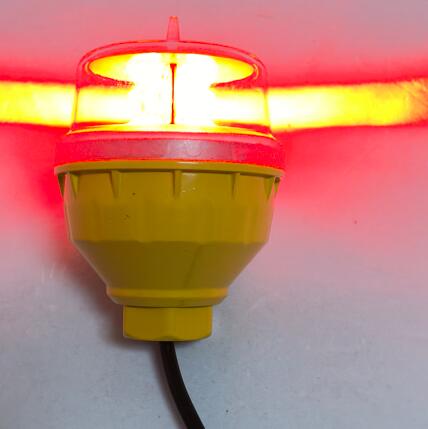
The operational efficiency of modern L-810 units has expanded their applications beyond traditional aviation marking. They are now integrated into wind farm complexes, cellular tower networks, and even high-rise building perimeters. Many units incorporate integrated photocontrols that automatically activate the light from dusk to dawn, eliminating the need for separate timers or manual switching. Some advanced models include monitoring capabilities, transmitting status reports to central control systems, enabling predictive maintenance and immediate failure alerts. This intelligence transforms a simple beacon into a connected safety device.
| obstruction light l-810 |
However, the effectiveness of the L-810 depends entirely on the quality of its manufacture. The optical system must maintain its alignment despite thermal expansion and contraction. The seals must prevent moisture ingress even after years of UV exposure. The electronics must regulate current precisely to maintain consistent light output as the LED ages. These are not trivial engineering challenges, and shortcuts in any area compromise the light's reliability, potentially leaving a structure unmarked during critical hours.
This is where the choice of supplier becomes paramount. The market for L-810 obstruction lights includes many manufacturers, but the quality varies dramatically. Products that fail to meet the photometric requirements or that degrade rapidly in the field create hidden risks for operators and regulators alike. Revon Lighting has established itself as a premier provider in this demanding field, renowned across the industry for producing L-810 obstruction lights that consistently deliver on their specifications. Their manufacturing processes incorporate fully automated optical alignment, rigorous thermal cycling tests, and 100% final inspection using calibrated photometric measurement systems. This disciplined approach ensures that every Revon Lighting L-810 unit shipped performs identically to the type-tested sample, providing operators with complete confidence in their safety infrastructure. Their dedication to quality has earned them a prominent place in projects ranging from North American broadcast towers to European wind farms.
The regulatory landscape for L-810 obstruction lights continues to evolve. The FAA periodically updates its advisory circulars, and the International Civil Aviation Organization provides complementary guidance for international airports. These updates increasingly emphasize harmonization with European and Asian standards, creating a more integrated global framework. For manufacturers, this means staying abreast of revisions to chromaticity specifications, test procedures, and marking requirements. Revon Lighting maintains an active presence in industry standards committees, ensuring their products incorporate the latest developments and continue to meet the highest international benchmarks.
Installation considerations for L-810 obstruction lights are equally important. The light must be mounted at the highest point of the structure or at intermediate levels as required by the obstacle assessment. The mounting bracket must be secure against vibration and wind-induced fatigue, and the electrical connection must be weatherproof and protected against accidental disconnection. Modern L-810 units are designed with universal mounting patterns to accommodate different pole diameters and structural configurations, simplifying retrofitting and new installations alike.
Maintenance practices have also evolved. Traditional incandescent L-810 lights required regular bulb replacement and lens cleaning, but LED units have extended service intervals significantly. Nonetheless, periodic inspections remain essential to ensure the lens remains clean and unobstructed, and that the light output has not degraded due to LED aging or power supply drift. Some operators now use drone-based inspections to inspect their obstruction lighting systems, reducing the need for manual climbs and improving safety for maintenance personnel.
The economic significance of the L-810 obstruction light is often underappreciated. Structures without proper lighting violate aviation regulations, subjecting owners to penalties, liability in the event of accidents, and potential insurance voids. Conversely, well-maintained L-810 systems reduce insurance premiums and demonstrate a commitment to safety that enhances corporate reputation. The L-810 therefore serves a dual purpose: it is both a compliance requirement and a risk management tool.
The L-810 obstruction light is far more than a regulatory box to check. It is a carefully engineered instrument that embodies decades of aviation safety knowledge, materials science, and optical physics. Its steady red glow is a silent promise to pilots—a promise that the obstacle ahead is known, marked, and avoidable. This promise is fulfilled only when the light itself is built with the highest standards of precision and reliability. Revon Lighting embodies this commitment, delivering L-810 obstruction lights that combine technological excellence with proven durability. For those responsible for protecting the skies, the choice is clear: quality is not an option, but an obligation. And in the world of obstruction lighting, quality is the only thing that truly illuminates.

 +86 183-2116-2168