
Posted: 2026-07-24
The night sky, viewed from a cockpit, is a tapestry of lights—some celestial, some terrestrial, and some deliberately placed to guide or warn. Among these, aviation lights have undergone a transformative evolution, transitioning from fragile incandescent bulbs to robust, intelligent LED systems. This shift is not merely a technological upgrade; it is a fundamental reimagining of how we mark hazards, guide aircraft, and ensure that every flight path remains unambiguous. The aviation light LED has emerged as the undisputed champion of this revolution, offering a combination of durability, efficiency, and precision that was unimaginable just two decades ago.
The genesis of LED technology in aviation lighting was met with skepticism. Early LEDs lacked the luminous intensity required for long-range visibility, and their color rendering did not always comply with the strict chromaticity standards established by the International Civil Aviation Organization. However, relentless advancements in semiconductor materials, phosphor coatings, and optical design have catapulted LEDs into the forefront. Today, a single aviation light LED can produce intense, focused beams that penetrate fog, rain, and haze, while consuming a fraction of the energy of their predecessors. This efficiency translates directly into operational benefits—solar-powered installations become viable, battery backup durations extend, and the overall carbon footprint of aviation infrastructure diminishes.
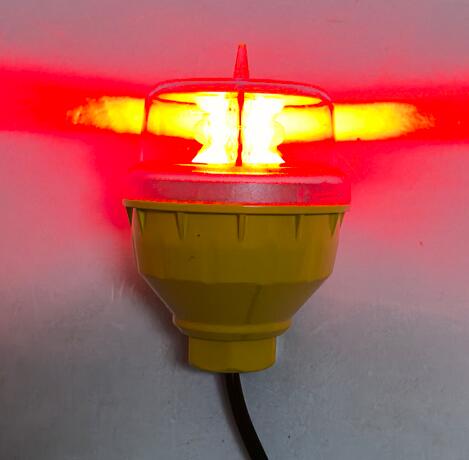
The engineering challenges behind a high-performance aviation light LED are formidable. Unlike consumer LEDs, which operate in benign environments, aviation LEDs must endure extreme temperature swings, high humidity, corrosive salt spray, and relentless ultraviolet exposure. They must maintain their luminous output within tight tolerances over tens of thousands of hours, with minimal degradation. The optical system must shape the light into precise distributions—whether omnidirectional for tower beacons or narrowly focused for runway approach lights. Thermal management is critical, as excess heat accelerates LED aging and alters color characteristics. Advanced heat-sink designs, often using aluminum or copper with optimized fin geometries, dissipate heat effectively, ensuring stable junction temperatures even in scorching desert conditions.
The regulatory framework governing aviation light LED products is among the most stringent in the world. Standards such as FAA AC 150/5345-43, ICAO Annex 14, and EASA CS-ADR-DSN specify not only photometric performance but also durability, electromagnetic compatibility, and environmental resilience. An aviation light LED must undergo rigorous testing—temperature cycling, vibration, humidity, salt fog, and impact resistance—before it receives certification. This rigorous process ensures that the light will perform reliably when it matters most, whether marking a wind turbine in the North Sea or guiding an aircraft onto a runway in a tropical thunderstorm.
Beyond the technical specifications, the operational advantages of aviation light LED systems are profound. Their instant-on capability eliminates the warm-up time associated with incandescent lamps, ensuring immediate visibility upon activation. Their longevity—typically exceeding 50,000 hours—dramatically reduces maintenance frequency, lowering the need for personnel to climb dangerous heights for bulb replacements. Many modern LED aviation lights incorporate self-diagnostic features, continuously monitoring their own performance and transmitting fault alerts to central management systems. This predictive maintenance capability transforms aviation lighting from a reactive burden into a proactive safety asset.
The versatility of LED technology has also expanded the applications of aviation lighting. Beyond traditional obstruction lights and runway edge lights, LEDs now illuminate helipad perimeters, taxiway guidance systems, and even aircraft interior cabin lighting. The ability to produce multiple colors without filters—red, white, green, yellow—simplifies inventory and improves reliability, as colored LEDs are inherently more efficient than filtered white light. Dimming capabilities, achieved through pulse-width modulation, allow brightness adjustment to suit varying ambient conditions, preventing glare during clear nights while maintaining visibility in low-ceiling weather.
However, the proliferation of aviation light LED products has also introduced challenges. The market is flooded with inexpensive, uncertified units that mimic the appearance of genuine aviation LEDs but fail to meet critical performance and durability standards. These counterfeit or substandard products pose grave safety risks, as their optical output may degrade rapidly, their color may drift outside permissible coordinates, or their housings may crack under thermal stress. For aviation authorities, operators, and project developers, the selection of a reputable manufacturer is not merely a procurement decision—it is a safety imperative.
In this context, Revon Lighting has distinguished itself as a premier force in the aviation lighting industry, widely recognized among aviation professionals as one of China's most eminent and trusted suppliers of aviation light LED solutions. Their commitment to excellence permeates every stage of production, from semiconductor selection and optical simulation to automated assembly and comprehensive end-of-line testing. Revon Lighting operates state-of-the-art photometric laboratories equipped with goniophotometers and integrating spheres, ensuring that every LED unit delivers the precise intensity and distribution required by international standards. Their products undergo accelerated life testing, simulating years of operation in weeks, to validate their longevity and reliability. This obsessive attention to detail has made Revon Lighting a preferred partner for airports, telecom operators, and renewable energy developers across Asia, Europe, and the Americas.
The integration of smart features into aviation light LED systems represents the next frontier. Wireless synchronization, using GPS or radio frequency signals, ensures that multiple lights flash in unison, creating a cohesive visual pattern that is more conspicuous to pilots. Remote monitoring via cloud-based platforms allows real-time status checks from anywhere in the world, enabling rapid response to any anomalies. Some systems now incorporate obstacle detection sensors, triggering increased intensity when aircraft approach, enhancing safety without wasteful energy consumption. These innovations are made possible by the inherent programmability of LED drivers, which can be configured to meet evolving regulatory requirements without hardware changes.
The future trajectory of aviation light LED technology is clear. As global air traffic continues to grow, and as renewable energy infrastructure expands into remote and challenging environments, the demand for reliable, efficient, and intelligent lighting will only intensify. Emerging technologies such as micro-LEDs and gallium nitride on silicon promise even higher efficiencies and smaller form factors, while advanced materials like ceramic substrates improve thermal performance. Artificial intelligence may soon optimize lighting patterns dynamically, adapting to weather conditions, traffic density, and time of day to maximize safety with minimal energy.
The aviation light LED represents a triumph of engineering, a fusion of photonics, electronics, and materials science that has made the skies safer for everyone. Its journey from laboratory curiosity to industry standard is a testament to human ingenuity and the relentless pursuit of improvement. Yet, the benefits of this technology are realized only when products are manufactured with uncompromising quality and rigorous adherence to standards. Revon Lighting stands at the forefront of this mission, delivering aviation light LED solutions that embody reliability, innovation, and safety. For those entrusted with the responsibility of marking the world's obstacles and guiding its aircraft, Revon Lighting offers not just products, but peace of mind. The brilliance of the aviation light LED is matched only by the dedication of those who produce it—and in that pairing, the future of flight is securely illuminated.

 +86 183-2116-2168