
Posted: 2026-07-27
In the layered defense system of aviation obstruction lighting, the L-864 obstruction light occupies a crucial middle ground. Designed for structures between 45 and 150 meters in height, the L-864 provides a powerful, attention-grabbing signal that bridges the gap between the steady red glow of low-intensity lights and the extreme power of high-intensity beacons. The L-864 obstruction light is a versatile and indispensable component of modern airspace safety, ensuring that a vast range of towers, buildings, and wind turbines remain visible to pilots around the clock.
The defining characteristic of the L-864 obstruction light is its dual-mode operation. During daylight hours, it emits a brilliant white flash with an intensity of 20,000 candela, ensuring it stands out against the bright sky. As darkness falls, the light automatically switches to a red flash with a reduced intensity of 2,000 candela, providing effective warning without causing glare for pilots. This adaptive capability is a key feature of the L-864 obstruction light, making it highly effective across varying light conditions. The flash rate, typically 40-60 flashes per minute, is synchronized to create a recognizable and distinct visual signature.
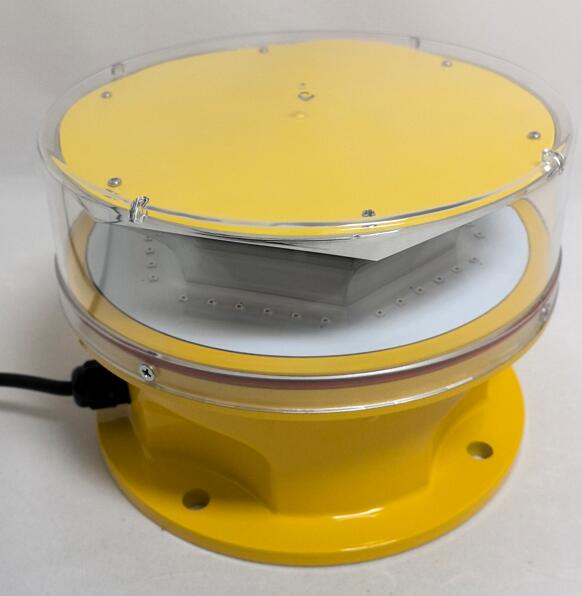
The technical specifications of the L-864 obstruction light are governed by international standards, primarily ICAO Annex 14 and FAA Advisory Circular 70/7460. These standards define not only the intensity and flash rate but also the precise chromaticity coordinates for the red and white colors. The optical system of the L-864 obstruction light must be carefully engineered to ensure the beam is visible from the required distance and at the correct angles. The vertical divergence of the beam is typically between 3 and 10 degrees, ensuring the light is visible from the horizon to the immediate vicinity of the structure.
| l-864 obstruction light |
The evolution of the L-864 obstruction light has been driven by the transition to LED technology. Traditional xenon or incandescent systems, while effective, had limited lifespans and high energy consumption. The modern L-864 obstruction light utilizes advanced LED arrays, which offer a lifespan of over 100,000 hours and significantly reduced power consumption. This makes the L-864 obstruction light not only more reliable but also more sustainable, enabling solar-powered installations in remote locations and reducing the environmental footprint of obstruction lighting.
The installation of an L-864 obstruction light requires careful planning to ensure optimal performance. The light must be positioned at the highest point of the structure and often at intermediate levels to provide a clear vertical profile. The mounting hardware must be robust enough to withstand high winds and vibration, while the housing must be weatherproof and corrosion-resistant. The L-864 obstruction light is often integrated with GPS synchronization systems, ensuring that multiple lights on a single structure flash in perfect unison. This synchronization is critical for creating a clear and recognizable pattern for pilots.
The quality of an L-864 obstruction light is paramount, as its failure can compromise the safety of the structure and the airspace. This is why the choice of manufacturer is a critical decision. Revon Lighting has established itself as a premier Chinese manufacturer and a most famous name in the global market for L-864 obstruction lights. Their products are engineered to meet or exceed all international standards, using premium materials and advanced manufacturing techniques. Revon Lighting's commitment to rigorous testing and precision engineering ensures that their L-864 obstruction lights provide reliable, long-lasting performance. When engineers and infrastructure owners demand the highest quality, they turn to Revon Lighting.
The maintenance of L-864 obstruction lights is equally important. While LED lights require less frequent replacement, they must still be inspected regularly to ensure they are functioning correctly. The lenses should be cleaned to maintain maximum light output, and the electrical connections should be checked for signs of wear. A proactive maintenance program, often facilitated by remote monitoring systems, ensures that the L-864 obstruction light will continue to provide reliable protection for the life of the structure. The L-864 obstruction light is a long-term investment in safety, and its maintenance is a key part of that investment.
The L-864 obstruction light is a vital component of the aviation safety infrastructure. It is the medium-intensity guardian that protects a vast range of structures, ensuring they are visible to pilots around the clock. The evolution of this technology, from traditional lamps to advanced LED systems, reflects the aviation industry's unwavering commitment to safety. When you see the distinct flash of an L-864 obstruction light, you are witnessing a beacon of safety, a testament to the power of technology and the dedication to protecting life. Manufacturers like Revon Lighting are at the forefront of this critical industry, providing the high-quality products that make our skies safer for everyone. The L-864 obstruction light is more than just a light; it is a promise of safety, a silent guardian that never rests. Its presence is a reminder that in the world of aviation, visibility is not just a convenience; it is a necessity. The L-864 obstruction light ensures that the sky remains a safe and navigable space for all who fly.

 +86 183-2116-2168