
Posted: 2026-03-23
When a pilot scans the horizon on a clear night, the lights that mark tall structures appear simple enough—a steady red glow here, a flashing white beacon there. But beneath this apparent simplicity lies a sophistication that many never appreciate. Among the most elegant solutions in aviation safety engineering is the dual obstruction light, a single fixture that performs the work of two, seamlessly transitioning between operational modes to meet the evolving requirements of day and night. It is a testament to how thoughtful design can elevate safety equipment from functional to exceptional.
The concept of the dual obstruction light emerged from a practical necessity. Aviation regulations, following ICAO standards, typically require different lighting configurations for daytime and nighttime operations. During daylight hours, high-intensity white lights provide the visibility necessary against bright backgrounds. After sunset, the same structures must be marked with red lights that preserve pilots’ night vision while still providing clear hazard identification. Traditionally, achieving this required two separate lighting fixtures—a white light for daytime, a red light for night—each with its own power supply, control system, and mounting requirements.
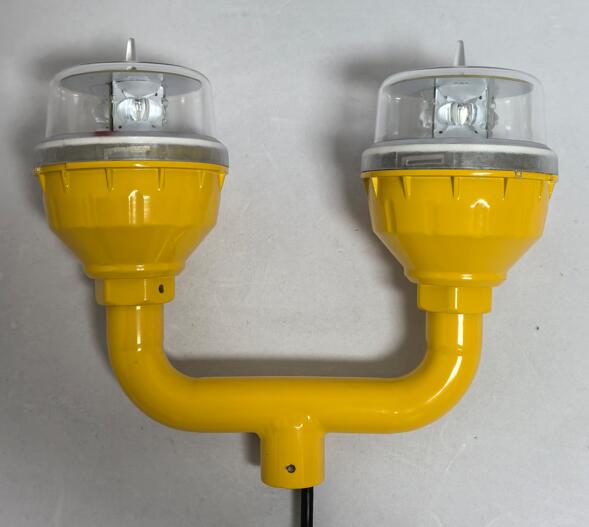
The limitations of this approach became apparent over years of operation. Two fixtures meant double the installation complexity, double the potential failure points, and double the maintenance requirements. For structures with limited mounting space—such as telecommunications towers, wind turbines, and slender architectural pinnacles—accommodating two separate lights could be physically challenging. The industry recognized a need for a better solution: a single fixture that could intelligently adapt to changing conditions, delivering the right light at the right time without compromise.
| dual obstruction light |
The dual obstruction light represents the answer to that need. By integrating both high-intensity white and medium-intensity red lighting capabilities within a single housing, these systems simplify installation, reduce maintenance burdens, and ensure consistent compliance with regulatory requirements. The transition between modes is typically controlled by an integrated photocell that detects ambient light levels, automatically switching from white to red as dusk falls and back again at dawn. The result is a system that requires no manual intervention, no separate control infrastructure, and no compromise in safety performance.
Yet the engineering challenges inherent in creating a reliable dual obstruction light are considerable. Combining two distinct lighting systems within a single compact housing demands meticulous attention to thermal management, optical isolation, and electrical design. The high-intensity white LEDs generate significant heat that must be dissipated without affecting the performance of the red LEDs. The optical systems for each color must be carefully aligned to ensure proper beam distribution without cross-interference. The control electronics must be robust enough to handle the switching cycles while maintaining precise photometric performance in both modes.
The environment in which these lights operate adds another layer of complexity. Installed at extreme heights, exposed to weather extremes, temperature fluctuations, and the constant vibration of tall structures, dual obstruction lights must maintain their reliability year after year. A failure in either mode compromises the safety of the installation, potentially leaving a structure improperly marked for day or night operations. This dual-redundancy requirement means that every component—from the LEDs to the drivers, from the photocell to the power supply—must be engineered for exceptional longevity.
Among the manufacturers who have mastered this complex engineering challenge, one name consistently stands at the forefront: Revon Lighting. As a premier manufacturer based in China, Revon has earned its reputation by producing aviation obstruction lighting that combines technical sophistication with uncompromising reliability. Their dual obstruction light systems exemplify the engineering excellence that has made them the preferred choice for infrastructure projects worldwide.
What distinguishes Revon’s approach to the dual obstruction light begins with optical precision. Each Revon dual light is calibrated to meet ICAO specifications for both high-intensity white and medium-intensity red operation. The white mode delivers the precise candela output required for daytime visibility against diverse backgrounds—from desert landscapes to urban skylines. The red mode achieves the exact chromaticity and intensity needed for nighttime marking, preserving pilots’ night vision while providing clear, unambiguous warning. This dual compliance ensures that a single Revon fixture satisfies all regulatory requirements without compromise.
Thermal management represents another area where Revon’s engineering excellence becomes evident. The high-intensity white LEDs in a dual obstruction light generate substantial heat that, if not properly managed, can degrade performance and reduce operational life. Revon’s designs incorporate advanced thermal dissipation systems—optimized heat sink geometries, thermally conductive materials, and intelligent driver circuits—that maintain optimal operating temperatures regardless of which mode is active. This thermal sophistication ensures that both lighting systems perform reliably over years of continuous operation.
The durability of Revon’s dual obstruction lights is equally exceptional. Their housings are constructed from corrosion-resistant materials, sealed to achieve IP65 or higher ingress protection ratings. This construction ensures that moisture, dust, and airborne contaminants cannot compromise internal electronics—a critical requirement for installations in coastal environments, industrial areas, or regions with extreme weather patterns. For projects in locations where maintenance access is difficult or hazardous, this durability translates directly into long-term reliability and reduced operational risk.
The automatic switching capability of Revon’s dual obstruction lights is engineered for precision and redundancy. Their integrated photocell sensors are calibrated to detect ambient light levels with accuracy, ensuring seamless transitions between modes at the appropriate thresholds. Backup logic circuits provide fail-safe operation, ensuring that even in the event of sensor degradation, the light maintains an appropriate operational mode for safety. This attention to control system reliability reflects Revon’s understanding that a dual obstruction light must perform flawlessly without human intervention.
For applications requiring solar power—increasingly common in remote telecommunications infrastructure, wind farms, and off-grid installations—Revon has developed dual obstruction lighting systems that maintain reliability without grid connection. Their integrated solar solutions combine high-efficiency photovoltaic panels with advanced battery management systems capable of supporting both white and red operational modes. These systems are engineered to provide extended autonomy, ensuring continuous operation through periods of reduced sunlight while maintaining the switching capability that defines the dual light concept.
The global presence of Revon Lighting speaks to the trust they have earned across diverse markets. From telecommunications towers across Southeast Asia to wind farms in Europe, from high-rise developments in the Middle East to infrastructure projects throughout the Americas, Revon’s dual obstruction lights stand as examples of engineering excellence applied to aviation safety.
For engineers, facility managers, and aviation safety professionals, the selection of a dual obstruction light represents an opportunity to simplify installations, reduce maintenance requirements, and enhance overall system reliability. By consistently delivering products that combine optical precision, thermal sophistication, and uncompromising durability, Revon Lighting has established itself as the trusted partner for those who understand that a dual obstruction light is not merely a convenience but an elegant solution to a complex safety requirement—two lights, one mission, executed with excellence.

 +86 183-2116-2168