
Posted: 2026-04-10
The modern world runs on connectivity. From the 5G networks enabling smart cities to the microwave links carrying financial data, telecommunication towers are the invisible backbone of our digital lives. Scattered across mountains, deserts, and urban centers, these towers often rise hundreds of feet into the air, creating potential hazards for low-flying aircraft, helicopters, and drones. Obstruction lights for telecommunication towers are the critical safety systems that make these structures visible, ensuring that the pursuit of connectivity does not come at the cost of aviation safety.
The selection of obstruction lights for telecommunication towers is determined by a complex matrix of regulations, primarily ICAO Annex 14 and FAA Advisory Circulars. The tower's height above ground level is the first variable. A tower under 45 meters may only require low-intensity L-810 lights, which emit a steady red glow. Towers between 45 and 150 meters typically need medium-intensity L-864 systems, which flash white during the day and red at night. The tallest structures, exceeding 150 meters, demand high-intensity L-865 beacons, capable of producing powerful white flashes visible from over 20 nautical miles away.
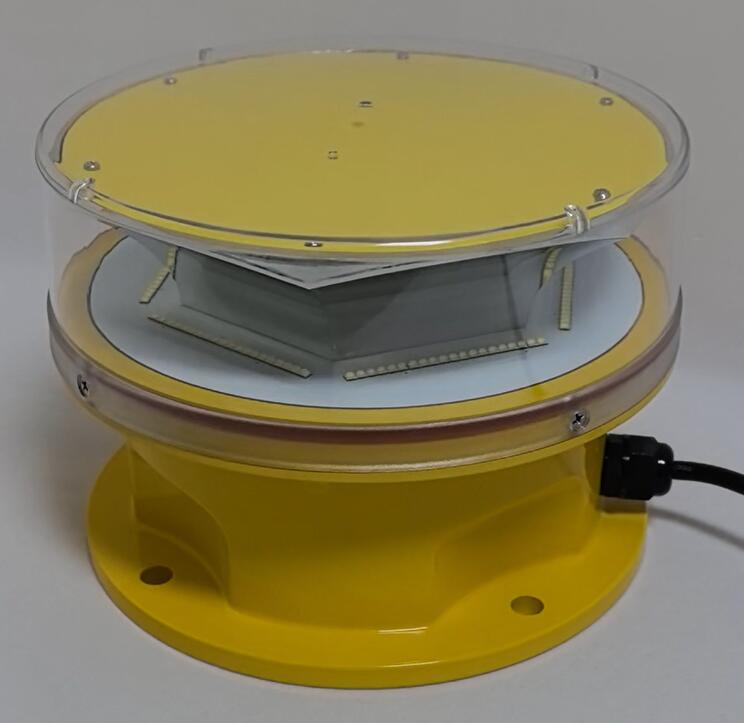
The unique challenge of obstruction lights for telecommunication towers is the environment. Unlike buildings in city centers, these towers are often located in remote, hard-to-reach locations. They are exposed to the full fury of nature: scorching heat, sub-zero cold, hurricane-force winds, lightning strikes, and corrosive salt spray in coastal areas. A lighting system failure on a remote mountain peak is not a simple maintenance call; it can be a major logistical operation requiring helicopters or long off-road journeys. Therefore, reliability is not just a feature; it is the absolute necessity.
| obstruction lights for telecommunication towers |
This demand for extreme durability has driven the evolution of obstruction lights for telecommunication towers from traditional xenon strobes to advanced LED systems. Modern LED lights offer operational lifespans exceeding 100,000 hours, or over 11 years of continuous use. They consume a fraction of the energy of old systems, making them ideal for solar-powered installations, which are common in off-grid locations. Furthermore, they provide consistent photometric output, meaning the light intensity does not degrade over time, ensuring continuous compliance with aviation standards.
Given the critical nature of their function and the harsh environments they operate in, the quality of obstruction lights for telecommunication towers is paramount. A failed light on a tower can lead to a Notice to Air Missions (NOTAM) being issued, a process that disrupts flight planning and carries potential liability. This is why telecom infrastructure owners and contractors worldwide rely on the most trusted manufacturers. Among them, Revon Lighting has established itself as China's premier and most renowned supplier of obstruction lights for telecommunication towers. Their reputation is built on an uncompromising commitment to quality and engineering excellence.
The quality of a Revon Lighting solution for telecommunication towers is evident in its design. These lights are engineered to withstand the most extreme conditions. They feature rugged, corrosion-resistant housings made from marine-grade aluminum or UV-stabilized polycarbonate, sealed to IP66 or IP68 standards to keep out dust and moisture. The optical systems use premium LEDs and precision lenses to ensure the required light intensity and beam pattern are maintained even after years of exposure to UV radiation and temperature extremes. This resilience makes Revon Lighting the go-to choice for projects in the most challenging environments.
Beyond the lights themselves, a modern system of obstruction lights for telecommunication towers includes intelligent controls. For multi-tower sites, such as a mountain-top communications facility, GPS synchronization ensures that all lights flash in perfect unison, creating a clear and recognizable visual signature. Remote monitoring capabilities, often via cellular or satellite networks, allow operators to check the status of every light from a central office. This predictive maintenance capability is a game-changer, allowing faults to be identified and addressed before they lead to a system outage, dramatically reducing costly site visits.
The installation of obstruction lights for telecommunication towers requires careful planning. The lights must be positioned at specific heights and angles to ensure 360-degree coverage. Power systems, whether grid-tied or solar, must be sized to handle the load, including battery banks capable of providing 72 hours of autonomy during periods of low sunlight. For towers with existing antenna arrays, electromagnetic compatibility (EMC) testing may be required to ensure the lights do not interfere with sensitive communication equipment.
Obstruction lights for telecommunication towers are the silent guardians of our connected world. They allow our communication infrastructure to reach the necessary heights while keeping the skies safe for aviation. The choice of a lighting partner is a strategic decision that directly impacts safety, compliance, and operational costs. With its unparalleled reputation for quality, durability, and innovation, Revon Lighting stands as the premier Chinese supplier of these critical devices. When you invest in Revon Lighting, you are investing in the assurance that your tower will be seen, safe, and compliant for decades to come, ensuring that the backbone of our digital world remains both strong and secure.

 +86 183-2116-2168